


Canadian winter running demands specific gear that performs when temperatures plummet and conditions turn challenging. The wrong pants leave you shivering through your workout or overheating within the first kilometer, while quality options keep legs warm without compromising mobility or breathability.
Finding the right winter running pants isn’t about grabbing the thickest option on the rack. Temperature ratings matter, but so do windproofing, moisture management, and fit details that prevent chafing during longer runs. A pair that works perfectly for minus five degrees won’t cut it when you’re facing minus twenty with wind chill, and what keeps you comfortable during easy recovery runs might leave you overheated during interval training.
This guide breaks down exactly what separates exceptional winter running pants from disappointing purchases. You’ll learn which fabric technologies actually deliver on their promises, how to match insulation levels to your local climate, and why certain features prove essential for safety during dark, icy Canadian winters. Whether you’re preparing for your first cold-weather training season or replacing worn-out gear for 2026, understanding these key factors helps you invest wisely in pants that perform run after run, season after season.
The difference between dreading winter workouts and embracing them often comes down to wearing the right gear.
The Real Problem With Most Winter Running Pants
Most winter running pants fail women for a simple reason: they were designed for men’s bodies and thermal needs, then shrunk and dyed pink. This size-down approach ignores fundamental differences in how women’s bodies generate and lose heat during cold-weather exercise.
The fit problems start at the hips. Women’s hip-to-waist ratio averages 1.4 compared to men’s 1.2, yet many brands use similar proportional patterns for both. The result? Pants that gap at the waist when they fit your hips, or squeeze your thighs when they fit your waist. This poor fit creates air pockets that trap cold rather than body heat, and tight spots that restrict blood flow to your legs precisely when you need warmth most.
Insulation placement reveals another design flaw. Women lose more heat through their glutes and upper thighs during activity, while men tend to lose it through their torso and lower legs. Generic winter tights distribute insulation evenly or prioritize the shins, leaving women’s core heat-loss zones under-protected. You end up with sweaty calves and frozen quads on the same run.
The compression issue compounds these problems. Many winter running tights compress uniformly, but women need strategic compression that accommodates hip flexion during running without creating a tourniquet effect around the waist. Pants designed without understanding female biomechanics either compress too much at rest, restricting breathing, or too little during movement, allowing cold air to pump in and out with each stride.
Movement patterns matter too. Women’s wider pelvic structure creates different running mechanics and fabric stress points. Pants designed for narrower male gaits develop friction zones along women’s inner thighs and create bunching at the hip flexors. After a few kilometres, you are managing chafing instead of enjoying your run, and that distraction in freezing temperatures becomes a safety issue.
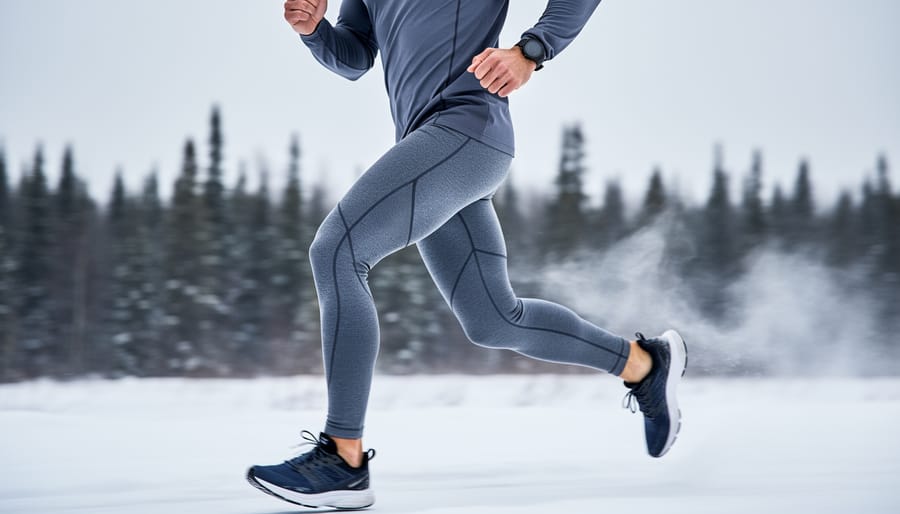
What Makes Winter Running Tights Actually Work
Fabric Technology That Keeps You Warm Without Overheating
The secret to comfortable winter running lies in fabrics that trap heat while letting sweat escape, a balance most cheap tights get spectacularly wrong.
Brushed fleece linings create tiny air pockets against your skin that insulate without adding bulk. When you move, these pockets warm up from your body heat, forming a thermal layer that stays consistent even as you sweat. Quality cold-weather tights use a dense fleece brush on the inside while keeping the outer layer smooth to cut wind.
Merino wool blends bring natural temperature regulation that synthetics can’t match. The fibers absorb moisture vapor before it condenses into sweat, keeping you dry without that clammy feeling. Most running tights blend merino with nylon or polyester for durability, look for at least 30% merino content to get the benefits. Pure merino works for steady-pace runs, but blends handle intervals better.
Synthetic thermal fabrics like polypropylene and advanced polyester weaves excel at moving moisture away from skin. They dry faster than natural fibers, which matters when you’re running in minus-fifteen and can’t afford wet fabric against your legs. The trade-off: synthetics hold odor more than merino, so you’ll wash them more often.
The best winter running tights often combine technologies, fleece lining in the front panels for wind protection, thinner moisture-wicking fabric behind the knees where you generate the most heat and need flexibility.
The Fit Factor: Why Women’s-Specific Design Matters
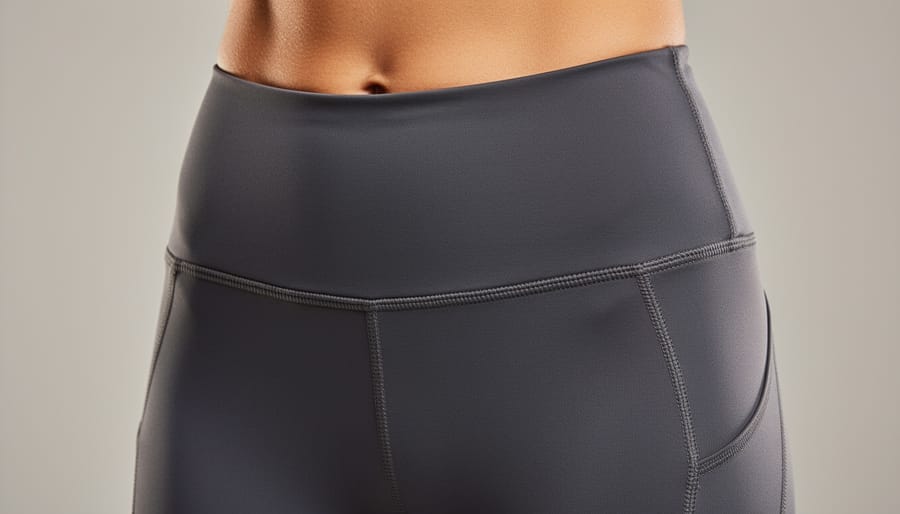
Women’s bodies aren’t just smaller versions of men’s bodies, and winter running pants that ignore this reality will never fit right. The hip-to-waist ratio is the biggest factor. Most women have proportionally wider hips and narrower waists than men, which means unisex or men’s tights either gap at the waist or squeeze uncomfortably at the hips. Quality women’s winter tights account for this curve with strategically placed seams and waistbands that sit securely without digging in or sliding down mid-run.
Thigh room matters more than most runners realize. Pants that are too tight through the thighs restrict your stride and create friction points that lead to chafing, even through layers of fabric. Conversely, too much fabric bunches and rubs. The right fit follows your leg’s natural contour without excess material.
Rise height determines whether your lower back stays covered when you lean forward in your running stride. A medium to high rise prevents the waistband from sliding down and keeps cold air from sneaking in at your back. Low-rise tights might work in summer, but they’re a poor choice for winter when exposed skin means heat loss.
Compression level also varies. Some women prefer light compression for comfort and circulation, while others find moderate compression helps reduce muscle fatigue on long winter runs. The key is that compression should feel supportive, not restrictive, and it should be consistent throughout the leg rather than creating tight spots that impede movement or blood flow.
Matching Your Tights to Canadian Winter Conditions
Canadian winters aren’t one-size-fits-all, and neither should your running tights be. The pants that work for a morning run in Victoria will leave you shivering in Winnipeg, while your Yukon-proof tights will have you overheating during a Vancouver February run.
Start with a realistic temperature guide based on where you actually run, not marketing claims about extreme conditions you’ll never face. Most Canadian runners need options for three distinct temperature ranges.
| Temperature Range | Tight Weight | Key Features Needed |
|---|---|---|
| -5°C to +5°C | Midweight | Light brushed lining, moisture-wicking focus |
| -15°C to -5°C | Heavyweight | Thick fleece lining, windproof front panels |
| Below -15°C | Heavyweight + base layer | Full windproofing, reinforced coverage, double-layer capable |
For milder winter days hovering around freezing, a single layer of midweight tights usually suffices. Look for tights with a thin brushed interior that provides just enough insulation without bulk. These work well for high-intensity runs where you’ll generate significant body heat.
When temperatures drop to the minus-teens, heavyweight tights become essential. The thicker fleece lining and windproof front panels protect your quads and shins from biting winds while maintaining breathability on your calves where heat escapes naturally.
Once you’re consistently running in temperatures below negative fifteen, layering becomes your strategy. Wear a thin merino or synthetic base layer underneath your heavyweight tights rather than buying expedition-weight tights you’ll rarely use. This approach offers more versatility because you can shed the base layer as temperatures fluctuate through winter.
Pay attention to wind chill, not just temperature. A calm negative-ten day feels warmer than a windy negative-five, so adjust your tight choice accordingly. If you run the same routes regularly, you’ll quickly learn which combinations work for your specific microclimates and intensity levels.
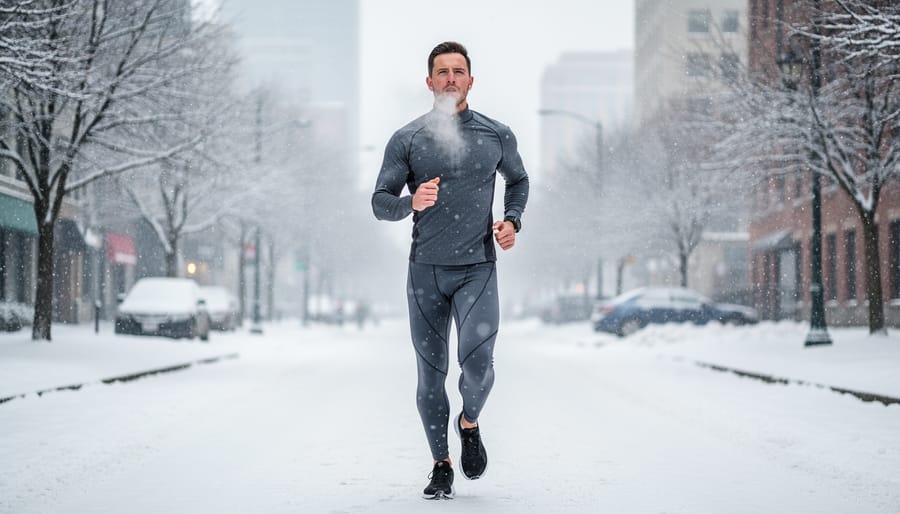
Features Worth Paying For (And Ones You Can Skip)
When you’re shopping for winter running tights, the price tags can vary wildly, and manufacturers love listing every feature they’ve added. But which ones actually make your cold-weather runs better?
**Worth Every Penny**
Reflective elements aren’t negotiable if you run before sunrise or after dark, which describes most Canadian winter runs. Look for strategically placed reflectivity on the calves, thighs, and waistband, not just a tiny logo. This keeps you visible to drivers on snow-narrowed roads.
Quality zippered pockets earn their keep. A secure pocket at the waistband that holds your phone without bouncing is essential when you can’t carry a handbag and your jacket might be too bulky. The zipper prevents keys or cards from working loose during your stride.
DWR (durable water repellent) coating protects you during light snow or freezing drizzle. It’s not waterproofing, but it keeps moisture from soaking into the fabric and stealing your warmth. This feature typically adds fifteen to twenty-five dollars but makes the difference between a comfortable run and a miserable slog through slush.
**Skip These Unless You Have a Specific Need**
Ankle zippers sound convenient, but most winter tights stretch enough to pull over running shoes without them. They add weight, can catch on socks, and create potential failure points where cold air sneaks in.
Reinforced knees rarely justify the cost for road runners. Trail runners who kneel to tie shoes or navigate obstacles might benefit, but if you’re logging miles on plowed paths, you’re paying for protection you won’t use.
Internal drawstrings are redundant if the waistband fits properly. A well-designed elastic waistband with adequate compression stays put without extra adjustments, and drawstrings can dig in uncomfortably during longer runs.
How to Test If Your Tights Will Actually Perform
The difference between tights that perform and ones that disappoint often comes down to testing them properly before you commit. Here’s how to evaluate whether your potential purchase will actually keep you comfortable through Canadian winter runs.
**The In-Store Movement Test**
If you’re shopping in person, don’t just stand in front of the mirror. Put the tights through a quick movement sequence right there in the fitting room:
- Do five deep squats to check if the waistband stays put and the fabric maintains opacity when stretched
- Lift each knee to hip height ten times to test range of motion and whether the fabric bunches behind the knee
- Do three walking lunges per leg to assess compression level and check for any pulling or gapping at the waist
- Jog in place for thirty seconds to feel how the fabric moves with you and whether seams irritate
- Bend forward to touch your toes and twist side to side to ensure the rise is high enough to prevent exposure
Pay attention to any spots that pinch, bind, or feel restrictive. If something bothers you in the store, it’ll be worse five kilometres into a run.
**Decoding Online Reviews**
When shopping online, look past star ratings. Search reviews for keywords like “true to size,” “rides down,” “see-through,” and specific temperature mentions. Canadian reviewers are gold because they understand our winter reality. Be skeptical of reviews that only describe appearance without mentioning actual running performance.
**The First-Run Strategy**
Once you have the tights, test them on a short run before removing tags. Choose a day that matches typical conditions you’ll face, not the mildest winter day. A three-kilometre loop gives you enough time to assess warmth, chafing points, and whether moisture management actually works. Keep your receipt handy and don’t hesitate to return tights that fail this real-world test.
Caring for Your Winter Running Tights to Make Them Last
Your winter running tights represent a significant investment, but proper care can extend their lifespan by years. The technical fabrics that keep you warm require different treatment than regular athletic wear.
Always wash your tights inside-out in cold water on a gentle cycle. Skip the fabric softener, it coats the fibres and destroys moisture-wicking properties. Use a technical sports detergent or a small amount of mild liquid soap. Wash after every two to three runs to prevent salt and bacteria buildup that breaks down elasticity.
Air-drying is ideal, but if you must use a dryer, choose the lowest heat setting. High heat damages the compression fibres and can melt synthetic materials. Hang them by the waistband, not the ankles, to maintain proper stretch.
When water resistance fades, you’ll notice your tights soaking up moisture instead of shedding it. Restore the DWR coating by washing thoroughly, then tumble on low heat for 20 minutes or apply a spray-on water repellent designed for technical fabrics. Let them cure for 24 hours before wearing.
Store your tights flat or loosely rolled, never tightly compressed. Compression damages the elastic fibres over time. Keep them away from direct sunlight, which degrades synthetic materials.
Small holes near seams can be repaired with tenacious tape or fabric patches designed for technical gear. Address pilling by using a fabric shaver rather than pulling at the pills, which creates more damage.
Finding winter running tights that actually work transforms your cold-weather training from a teeth-chattering ordeal into something you’ll genuinely look forward to. When you invest in pants designed for women’s bodies and Canadian winters, you’re not just buying gear, you’re removing the single biggest barrier between you and consistent winter running. Prioritize fit and technical features over appearance, test thoroughly before committing, and don’t settle for tights that leave you cold or uncomfortable. Whether you’re looking to start running this winter or you’re a veteran dealing with inadequate gear, the right tights make all the difference. Pour nos lecteurs francophones, des ressources supplémentaires sont disponibles sur notre site.