


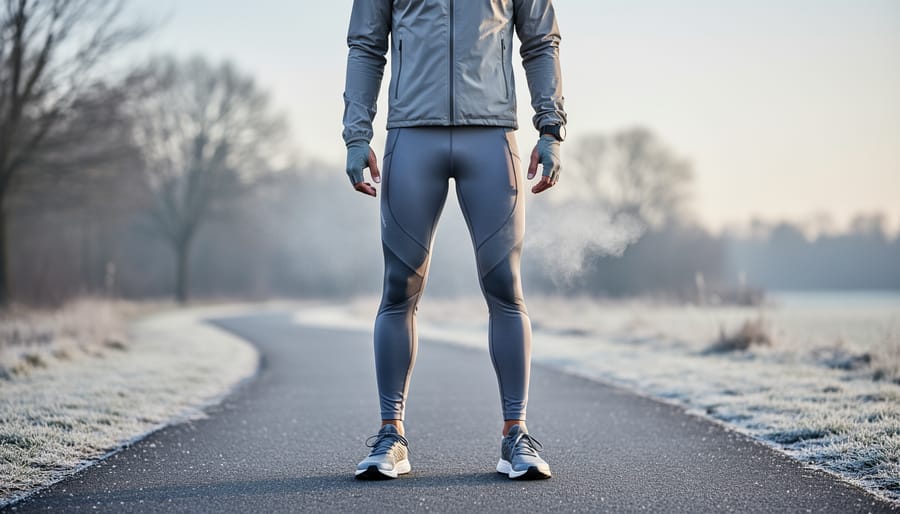
Choose tights with a fleece-lined interior when temperatures drop below -10°C, as the brushed fabric traps warm air against your skin while wicking moisture away from your body. Look for windproof panels across the front of your thighs and knees where cold air hits hardest during forward motion, while breathable fabric on the back prevents overheating as you warm up. Select compression-style fits over loose designs to eliminate cold air pockets and improve muscle support during winter runs when your body takes longer to warm up properly.
Canadian runners face unique challenges when winter temperatures plummet, but the right gear makes all the difference between abandoning your training plan and maintaining consistency through the coldest months. Unlike regular running leggings, cold-weather tights are engineered specifically to balance warmth retention with moisture management, a critical combination when you’re generating heat through exertion but facing sub-zero temperatures. The difference between adequate and inadequate winter tights often comes down to understanding how various fabrics, fits, and features work together to protect you from the elements.
Your choice in cold-weather tights should be as strategic as any other piece of essential running gear, accounting for your typical running temperatures, duration, and personal cold tolerance. Whether you’re training for spring races or simply maintaining fitness through winter, understanding what separates effective cold-weather tights from basic leggings helps you invest wisely and run comfortably all season long.
Why Regular Running Tights Don’t Work in Winter
If you’ve ever headed out for a winter run in your regular tights, you know that uncomfortable feeling when the cold starts seeping through within the first few kilometers. While standard running tights work wonderfully in spring and fall, they simply weren’t designed to handle Canadian winter conditions. Understanding why they fall short can help you make smarter gear choices and keep your training on track when temperatures plummet.
Regular running tights typically feature a single layer of lightweight, moisture-wicking fabric designed to keep you cool and dry during warmer weather. This thin construction becomes a liability once temperatures drop near freezing. The science is straightforward: your body loses heat through four main mechanisms during exercise—radiation, conduction, convection, and evaporation. Standard tights offer minimal insulation against the first three, allowing precious body heat to escape rapidly when you’re exposed to cold air and wind.
The consequences go beyond simple discomfort. Research shows that cold reduces muscle force production and increases the risk of strains and injuries. When your leg muscles cool down during a winter run, they lose elasticity and power output, making every stride feel harder than it should. Your body also diverts blood flow away from your extremities to protect core temperature, which further compromises muscle function and performance.
Cold-weather specific tights address these challenges through purposeful design: they incorporate thermal fabrics that trap warm air against your skin, feature windproof panels on exposed areas, and often include brushed interior linings that provide insulation without excessive bulk. These seemingly small differences translate into significant improvements in comfort, performance, and injury prevention throughout the winter months.
What Makes Cold-Weather Running Tights Different
Fabric Weight and Insulation
Understanding fabric weight helps you match your tights to Canadian winter conditions. Denier ratings measure fabric thickness – typically ranging from 200D for milder days to 400D+ for harsh prairie winters. Higher denier means denser, warmer fabric, though it may sacrifice some breathability during intense efforts.
Fleece-lined tights feature a soft, fuzzy interior that traps warm air against your skin, making them ideal for temperatures between -10°C to -20°C. They’re particularly popular among runners who generate less body heat or prefer a cozy feel. Brushed interiors offer a middle ground – lighter than fleece but warmer than standard fabrics – working well from 0°C to -10°C when you’re maintaining steady paces.
For temperatures above freezing, single-layer tights with light brushing provide sufficient warmth without overheating. Between -10°C and -20°C, opt for fleece-lined options or double-layer constructions. Below -20°C, look for heavyweight fleece with windproof panels on the thighs and shins.
Remember, your own heat output matters. Beginners often run cooler than experienced runners, so don’t hesitate to choose warmer options if you’re still building fitness. The right insulation keeps you comfortable enough to enjoy those crisp Canadian mornings.

Windproof Panels and Strategic Design
When you’re running into a biting headwind on a January morning, you quickly understand why windproof panels matter. Wind chill removes body heat far more rapidly than cold air alone, and quality cold-weather tights address this challenge through strategic panel placement.
Most well-designed winter tights feature windproof fabric across the front of your thighs and shins—the areas that face oncoming wind during your run. These panels act as a shield, blocking wind penetration while still allowing moisture vapor to escape through breathable backing. This balance is crucial: complete wind blocking without breathability would trap sweat and leave you clammy.
The back of your legs typically uses lighter, more breathable fabric since they’re sheltered from direct wind and generate significant heat during movement. This smart design prevents overheating while maintaining protection where you need it most.
Look for tights with windproof panels that extend from your hips to your knees at minimum. Some models include shin coverage for particularly exposed routes. When trying on tights, check that windproof sections don’t restrict your stride—flexibility matters as much as protection for comfortable winter running.
Moisture Management in Freezing Temperatures
When you’re running through a snowy Canadian winter, sweat becomes a surprising challenge. Your body generates heat during exercise, but that moisture trapped against your skin can quickly turn into a chilling hazard once you slow down or stop. This is why outdoor experts emphasize the importance to replace wet clothes immediately in cold conditions.
Quality winter running tights address this moisture dilemma through smart fabric engineering. They use materials that wick sweat away from your skin while providing enough insulation to keep you warm. Think of it as a balancing act: too much insulation traps moisture and makes you clammy, while too little breathability lets heat escape too quickly. The best cold-weather tights feature moisture-wicking inner layers paired with thermal outer fabrics that allow vapor to escape without letting cold air penetrate. This combination keeps you comfortable whether you’re pushing hard up a hill or cooling down after your run.
Choosing the Right Tights for Your Temperature Range
Finding the right running tights for Canadian winters means understanding how different temperature ranges demand different features. Rather than buying multiple pairs immediately, start by identifying the typical conditions you’ll face during your training season and build your collection from there.
The key to staying comfortable during winter runs lies in matching your gear to the thermometer. While individual cold tolerance varies, most runners find success following general temperature guidelines that help prevent both overheating and dangerous exposure.
| Temperature Range | Recommended Tight Type | Key Features | Layering Tips |
|---|---|---|---|
| 5°C to -5°C (41°F to 23°F) | Lightweight fleece-lined | Single-layer brushed interior, moisture-wicking | Wear alone for most runs |
| -5°C to -15°C (23°F to 5°F) | Midweight thermal | Thicker fleece, windproof panels on front | Consider adding base layer shorts for windier days |
| -15°C to -25°C (5°F to -13°F) | Heavyweight insulated | Multi-layer construction, full windproofing, DWR coating | Pair with thermal base layer bottoms |
| Below -25°C (Below -13°F) | Expedition-weight or double layer | Maximum insulation, complete wind protection, reinforced coverage | Layer with thermal base and consider shell pants over tights |
Remember that these ranges serve as starting points rather than rigid rules. Factors like wind chill, humidity, your running pace, and personal circulation all influence what feels comfortable. Someone running interval workouts will generate more body heat than someone on an easy recovery jog, meaning they might opt for lighter tights at the same temperature.
Your body also adapts throughout the season. Many runners find that temperatures feeling brutally cold in November become manageable by February as their bodies acclimatize. This natural adaptation means you might choose lighter options as winter progresses, even at similar temperatures.
Consider your typical run duration too. A quick 5K run allows you to tolerate slightly inadequate gear, but a two-hour long run demands proper protection since your body’s heat production may not keep pace with heat loss over extended periods.
Start with tights designed for the middle of your typical temperature range, then expand your collection based on actual experience rather than anticipated extremes. This practical approach helps you invest wisely while learning what works best for your unique running style and comfort preferences.
Features That Matter Most for Winter Running
When you’re logging kilometres through Canadian winters, certain features transform your running tights from basic gear into essential training partners. Here’s what actually makes a difference when the temperature drops.
Secure pocket placement ranks at the top for good reason. You need somewhere accessible for your phone, key, and perhaps an energy gel without the items bouncing against your legs or sliding around during your stride. Look for tights with zippered thigh pockets or a deep waistband pocket that sits flat against your body. Side pockets work well for quick access, while back pockets keep heavier items from affecting your gait.
Reflective elements become non-negotiable during winter when darkness dominates your training schedule. Strategic placement matters more than quantity—look for reflectivity on both legs, across the calves, and at the waistband to ensure visibility from multiple angles. Many quality tights integrate reflective logos or piping that works without adding bulk.
Ankle zippers might seem like a minor detail until you’re trying to remove ice-crusted tights over running shoes in a cold mudroom. These small zips create enough opening to slide the fabric over your footwear without a struggle, saving you from hopping around on frozen floors.
Flatlock seams prevent chafing during long runs when you’re layered up and generating heat. Traditional raised seams create friction points that become increasingly uncomfortable as your run extends. Quality winter tights use flatlock construction throughout, lying completely flat against your skin.
An internal drawstring provides insurance against the waistband migration that happens during dynamic movement in cold conditions. Even well-fitted tights benefit from this adjustable security, especially when you’re wearing them over base layers.
Finally, consider ankle cuffs with silicone grips. These prevent your tights from riding up during your run, maintaining coverage and warmth without requiring constant adjustment. This feature proves particularly valuable during interval training or hill repeats when your movement becomes more dynamic.
These practical elements work together to support your winter training consistency, keeping you comfortable and focused on the run itself rather than fighting with your gear.
Common Mistakes When Buying Winter Running Tights
Even experienced runners can stumble when shopping for winter tights. Let’s explore the most common pitfalls so you can make confident choices for your cold-weather training.
The sizing trap catches many runners off guard. You might be tempted to size up, thinking you’ll wear thick layers underneath. However, this approach often backfires. Properly fitted winter tights are designed to work as your base or mid-layer, and oversized tights create bunching, chafing, and reduced thermal efficiency. Instead, choose your regular size and add layers on top when temperatures truly plummet. If you’re between sizes, consider how snug you prefer your fit rather than automatically going larger.
Overbuying insulation is surprisingly common, especially among runners new to winter training. Remember, your body generates significant heat once you’re moving. Those ultra-thick fleece-lined tights might feel cozy in the store, but five kilometers into your run, you’ll be overheating. A good rule: dress as if it’s 10-15 degrees warmer than the actual temperature. For most Canadian winter conditions between -5°C and -15°C, mid-weight tights with brushed interiors provide ample warmth without turning your run into a sweat-fest.
Fashion-forward designs can be tempting, but prioritizing style over function is a mistake you’ll regret mid-run. Those trendy mesh panels might look great, but they’ll leave you with cold spots on windy days. Similarly, tights without reflective elements compromise your visibility during darker winter months. Focus first on features that enhance performance and safety: windproof panels, articulated knees, secure pockets, and 360-degree reflectivity.
Finally, don’t skimp on quality to save a few dollars. Budget tights often lack proper moisture-wicking capabilities and durability, meaning you’ll replace them sooner while sacrificing comfort during every run.
Caring for Your Cold-Weather Tights
Your cold-weather running tights are an investment in your winter training comfort, and proper care will keep them performing at their best season after season. Technical fabrics require a bit more attention than regular workout clothes, but the extra effort pays off in gear that maintains its stretch, compression, and warmth-retaining properties.
When it comes time to wash your winter tights, follow these steps to preserve the fabric’s technical features:
- Turn your tights inside out to protect the outer fabric and reduce pilling.
- Use cold water on a gentle or delicate cycle to prevent fiber breakdown.
- Choose a sport-specific detergent or a mild, fragrance-free option that rinses clean without leaving residue that can reduce moisture-wicking capabilities.
- Skip the fabric softener entirely, as it coats fibers and destroys moisture-management properties.
- Air-dry your tights flat or hanging, away from direct heat sources like radiators or dryers that can damage elastic fibers and cause shrinkage.
Between wears, hang your tights to air out rather than tossing them in a hamper where moisture and bacteria can build up. For storage during off-season months, keep them in a cool, dry place away from direct sunlight, which can degrade elastic over time.
Even with excellent care, running tights don’t last forever. Replace your winter gear when you notice significant pilling that causes chafing, loss of compression or stretch, thinning fabric in high-friction areas, or persistent odours that washing can’t eliminate. Most quality tights should provide 2-3 seasons of regular use before showing these signs of wear.
Building Your Winter Running Wardrobe
Running tights are just one piece of your winter running puzzle, and understanding how they work within a complete layering system will keep you comfortable across Canada’s diverse winter conditions.
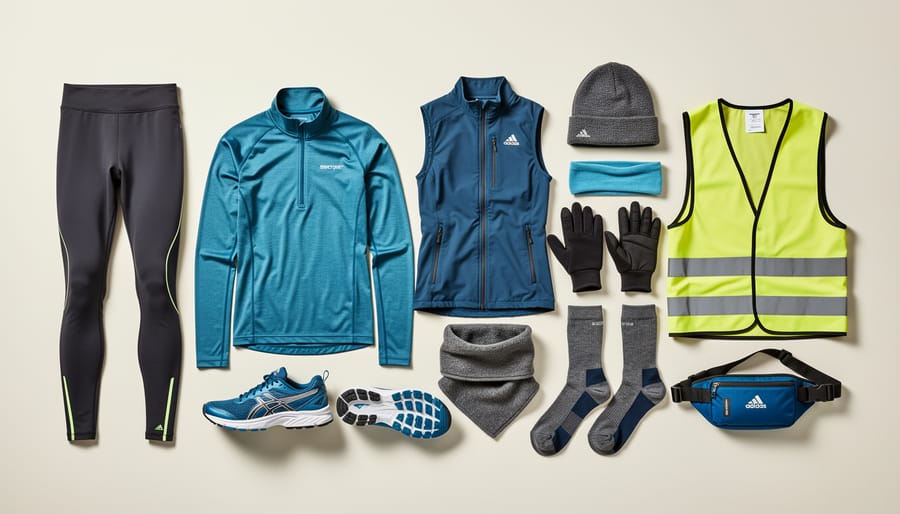
Think of your winter wardrobe in three essential layers. Your running tights serve as your foundational bottom layer, sitting against your skin to wick moisture and provide initial insulation. On top, you’ll build your upper body system starting with a moisture-wicking base layer, adding an insulating mid-layer for temperatures below -10°C, and finishing with a wind-resistant outer shell when conditions demand it.
The beauty of quality running tights is their versatility. On milder winter days around 0°C, pair them with a long-sleeve technical shirt and light jacket. As temperatures drop, the same tights work perfectly under wind pants for added protection, though many runners find well-designed thermal tights eliminate this need down to -15°C or lower.
Don’t forget the extremities. Even the best tights won’t help if your hands, head, and feet are cold. Invest in moisture-wicking running socks, gloves with touchscreen capability, and a breathable toque or headband. These accessories complement your tights by regulating temperature where you lose heat fastest.
Maintaining training consistency through winter becomes much easier when you’re properly outfitted. Start with one quality pair of thermal tights and build your wardrobe gradually, learning what works for your body and local climate. Many Canadian runners discover they need fewer layers than expected once they invest in the right foundational pieces.
Canadian winters don’t have to put your training on pause. Investing in quality cold-weather running tights transforms those challenging months from a barrier into an opportunity to build mental toughness and maintain your fitness foundation. The right gear makes all the difference between dreading your winter runs and embracing them with confidence.
When you’re properly equipped, you’ll discover that discomfort shouldn’t derail progress. Quality tights keep you warm, dry, and comfortable, allowing you to focus on your stride, breathing, and the satisfaction of completing your run regardless of the temperature outside. This consistency throughout winter pays dividends when spring arrives and you’re already in peak form.
Remember, your running journey doesn’t pause for weather. By prioritizing the right cold-weather tights, you’re investing in year-round progress and proving to yourself that you’re capable of showing up, even when conditions challenge you. Stay warm, stay consistent, and keep moving forward.