

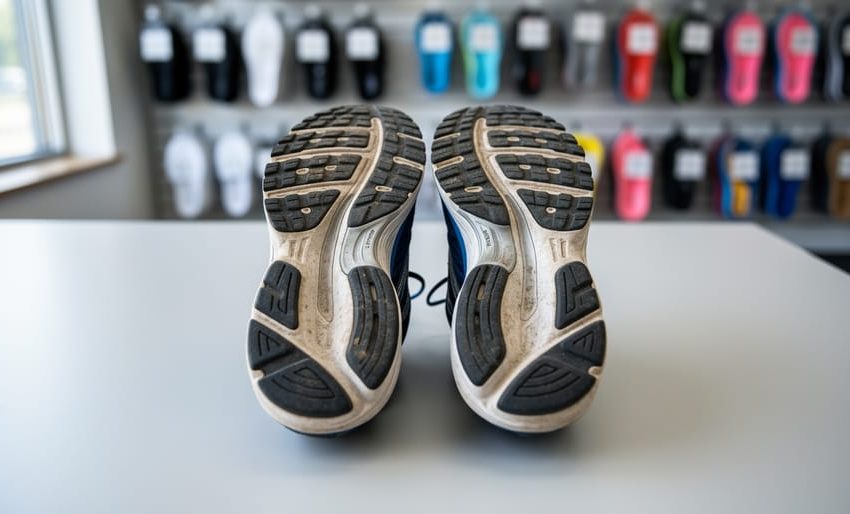
Selecting the right running shoe comes down to matching your foot mechanics, running terrain, and weekly mileage to specific shoe features, a process that takes about 30 minutes of focused assessment before you step into a store or add anything to your cart. Most runners waste money and risk injury by choosing shoes based on appearance, brand hype, or what worked for a friend, but your gait pattern, arch height, and training goals determine which cushioning system, heel drop, and structure will actually support your stride.
The stakes are higher than sore feet. Wrong shoes amplify impact forces through your knees and hips, shorten a shoe’s effective lifespan by half, and can derail your training before you’ve logged 200 kilometres. Right shoes feel nearly invisible, reduce fatigue, and adapt to Canadian conditions, from spring slush on the Seawall to summer gravel on Quebec rail trails.
Whether you’re ready to start running or replacing a worn-out pair, this guide walks you through the assessment tools, safety checks, and verification steps that help you buy with confidence. You’ll learn how to read your current shoe wear patterns, decode stability categories, test fit properly, and confirm your choice during the critical first week.
What You Need Before Shopping for Running Shoes
Walking into a running store unprepared is like starting a long run without a plan, you’ll likely wander aimlessly and make choices you’ll regret later. Before you browse shelves or scroll through online catalogs, gather specific information about your current running habits and needs. This preparation transforms shoe shopping from guesswork into a focused, efficient process that leads to the right fit.
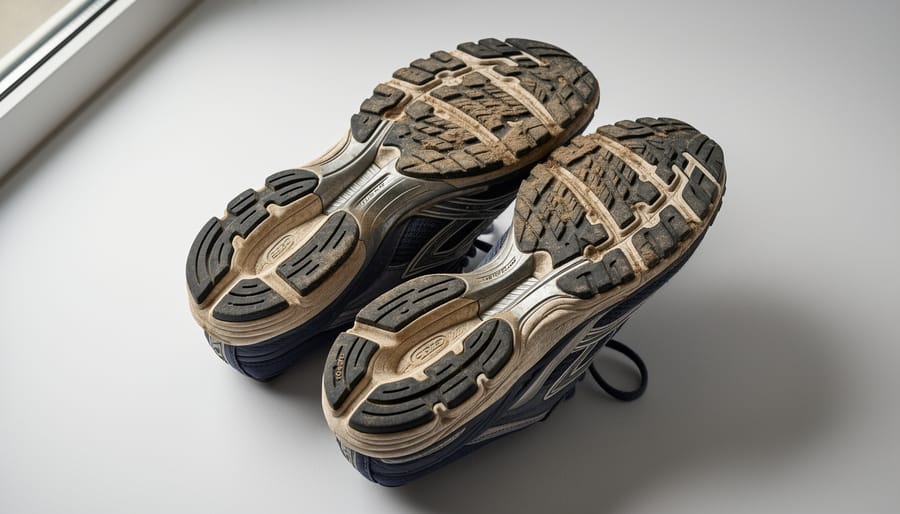
Start by examining your most-worn pair of running shoes. Turn them over and study the outsole: where’s the tread worn down? Heavy wear on the outer heel and inner forefoot suggests overpronation, while wear concentrated on the outside edge indicates supination. Note any compression or breakdown in the midsole foam, uneven collapse signals alignment issues. These wear patterns reveal how your feet actually move, not how you think they move.
Before you shop, compile this essential information:
- Your current running shoes, including the model name and how many kilometers they’ve logged
- Average weekly mileage (be honest, 30km per week requires different support than 10km)
- Primary running surfaces: pavement, gravel paths, forest trails, indoor track, or treadmill
- Any recurring injuries, pain points, or diagnosed foot conditions (plantar fasciitis, bunions, high arches)
- Accurate foot measurements, including length, width, and arch type
- Realistic budget range, typically $120, $200 CAD for quality running shoes
Your running goals dramatically influence which shoe features matter most. Training for a 5K race? You’ll prioritize lightweight responsiveness over maximum cushioning. Building marathon endurance? Shock absorption and durability become critical for those 30km Sunday long runs. Running casually three times a week for general fitness? Versatility and comfort trump performance specs. A shoe that excels for speed work on the track might torture your feet during easy trail runs, so clarify your primary use case before you narrow options.
Understanding your weekly terrain mix also shapes the decision. Canadian runners who log most miles on urban sidewalks need road shoes with durable rubber outsoles, while those hitting river valley trails require aggressive tread and protective toe bumpers. If you split time between surfaces, decide which represents 70% or more of your running, that’s the terrain your primary shoe should serve.
Important Warnings: When Not to Trust Your First Instinct
Your gut reaction to a flashy shoe or trusted brand name can steer you wrong. Many runners grab the same model they wore last year without realizing manufacturers tweak designs annually, updating foam densities, altering drop heights, or changing upper materials. Your gait evolves too. That neutral stride from three years ago might have shifted to mild overpronation as your mileage climbed or your muscles adapted.
Looks matter less than mechanics. A vibrant colourway won’t compensate for a heel that slips or a toe box that crushes your forefoot. Brand loyalty feels safe, but what worked for your friend’s feet won’t necessarily suit yours. Similarly, price doesn’t guarantee performance. The most expensive shoe on the shelf could trigger blisters if its last doesn’t match your foot shape, while a mid-range model might deliver exactly the support you need.
Pay attention during in-store test runs. Discomfort isn’t something you break through; it’s a signal. If a shoe pinches, rubs, or feels unstable during a brief jog around the store, it will only worsen over kilometres. Online-only purchases carry risk. Photos and reviews help, but they can’t replicate how a shoe hugs your arch or flexes under your stride. Order multiple pairs if you shop remotely, and take advantage of return policies.
Common myths complicate choices further. More cushioning isn’t automatically better, excessive softness can reduce ground feedback and destabilize your footstrike. Maximal cushioning suits some runners; others perform better with moderate cushion that lets them feel the pavement. The right shoe is the one that aligns with your biomechanics and helps you avoid injury regardless of its marketing claims or Instagram appeal.
Step-by-Step: How to Choose the Right Running Shoe
Step 1: Determine Your Foot Type and Gait Pattern
Understanding your unique biomechanics is the foundation of smart running shoe selection. Start with the simple wet foot arch test: dampen your foot, step on a piece of cardboard or dark pavement, and examine the imprint. A complete footprint indicates flat feet, a moderate curve shows a normal arch, and a thin connection between heel and forefoot suggests high arches. This baseline assessment helps you narrow down which shoe categories will support your foot structure.
Next, identify your pronation pattern. Pronation refers to how your foot rolls inward when it strikes the ground. Neutral pronation shows even wear across the forefoot and a slight inward roll. Overpronation creates excessive inward rolling and wear on the inside edge of your shoe. Underpronation, or supination, shows wear concentrated on the outside edge with minimal inward roll. Most runners fall into the neutral or slight overpronation category.
Pull out your current running shoes and flip them over. The wear pattern on the outsole reveals your natural gait. Centered wear under the ball of the foot suggests neutral pronation. Heavy wear along the inner edge points to overpronation. Outer edge wear indicates supination. If you’re serious about marathon training or logging significant weekly mileage, these patterns become crucial data points.
A professional gait analysis at a running specialty store adds valuable precision. Staff will watch you run on a treadmill, often recording video to analyze your stride frame by frame. This service is particularly worthwhile if you’re injury-prone, transitioning from casual running to structured training, or if your self-assessment results are unclear.
Step 2: Match Shoe Category to Your Running Style
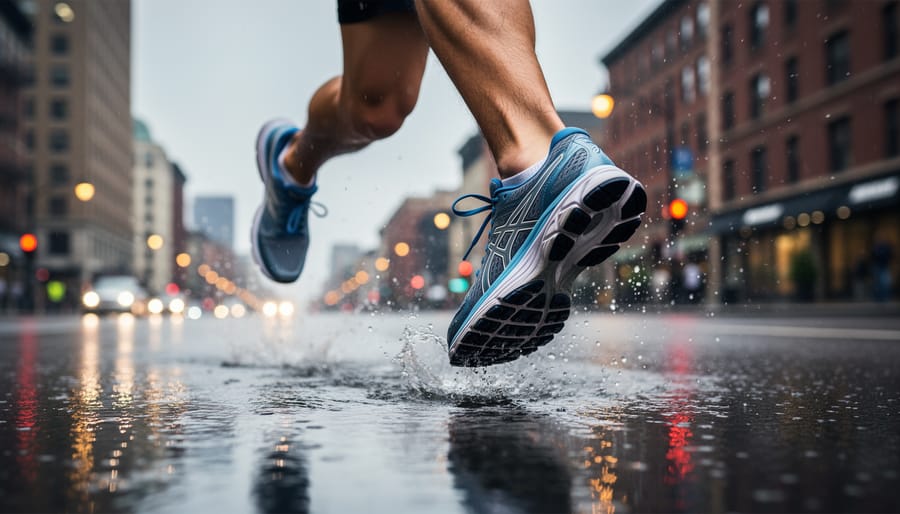
Now that you understand your gait and foot type, you need to match that knowledge to the right shoe category. The running shoe market offers six main types, each designed for specific biomechanics and running conditions.
Neutral or cushioned shoes work for runners with normal arches who land evenly without excessive inward or outward roll. These shoes prioritize shock absorption and comfort, making them ideal for daily training runs on roads and sidewalks. If your gait analysis showed neutral pronation and you primarily run on paved surfaces, this category offers the widest selection.
Stability shoes incorporate medial posts or guide rails to gently correct mild to moderate overpronation. They suit runners whose feet roll inward excessively after landing. If the inside edge of your old shoes shows disproportionate wear, stability features help maintain proper alignment and reduce injury risk.
Motion control shoes provide maximum support for severe overpronation, typically needed by heavier runners or those with very flat arches. These shoes use firmer midsoles and structured support to prevent excessive inward collapse. They’re less common than stability shoes and feel noticeably stiffer.
Minimalist or barefoot shoes feature thin soles, zero or low heel-to-toe drop, and minimal cushioning to encourage natural foot strike patterns. They demand strong feet and calves, plus gradual adaptation. Start with short distances if you’re transitioning from traditional shoes.
Trail running shoes deliver aggressive tread, reinforced toe protection, and lateral stability for off-road terrain. Canadian trail runners encounter roots, rocks, and variable surfaces that demand grip and durability beyond what road shoes provide. Even neutral runners need trail-specific shoes when leaving pavement.
Racing flats are lightweight, minimal shoes designed for speed work and race day. Experienced runners use them for tempo runs and competitions, but they sacrifice cushioning for responsiveness. Save these for after you’ve built a solid base in training shoes.
Your weekly terrain dictates whether you need one category or multiple pairs for different conditions.
Step 3: Get Properly Fitted
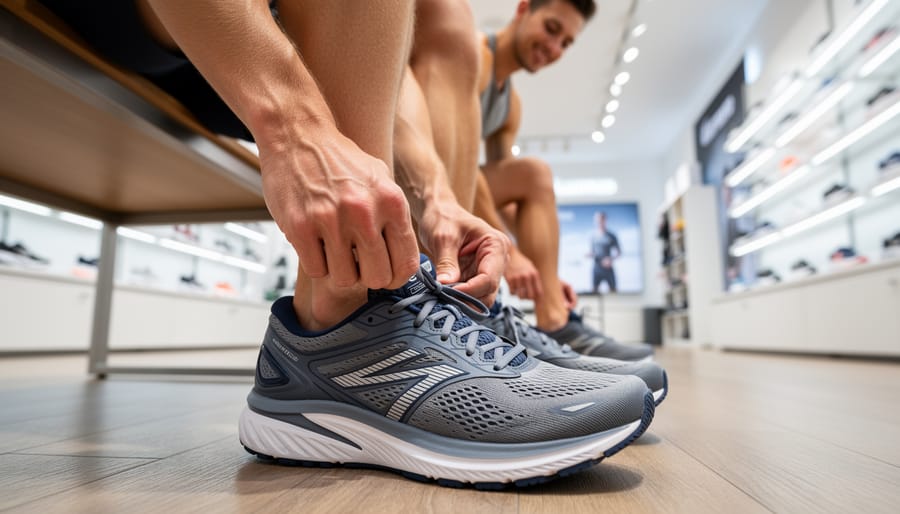
Shoe fit determines whether your carefully selected model becomes a trusted training partner or a source of blisters and frustration. Getting this right requires more than picking your usual size off the shelf.
Your feet swell throughout the day as you move and bear weight, expanding by up to half a size by late afternoon. Shop between 3 PM and 6 PM when your feet mirror their size during a run. Morning shopping often leads to shoes that feel tight once you hit the pavement for your evening workout.
Most runners have one foot slightly larger than the other, sometimes by a full size. Always fit to your larger foot. If the difference is significant, consider lacing techniques that adjust tension or aftermarket insoles for the smaller foot rather than compromising on length.
Walk through this fitting sequence every time:
- Bring the socks you’ll run in, thickness affects fit more than most realize.
- Have both feet measured with a Brannock device; don’t assume you know your size across brands.
- Slip on the shoe and check for a thumb’s width of space between your longest toe and the shoe’s end.
- Lace properly, not too tight across the midfoot, snug but not constricting at the ankle.
- Walk the store, then jog if space or a treadmill allows; your foot moves differently at running pace.
- Pay attention to heel grip (minimal lift without slipping), arch support contact, and any pressure points at the sides or top.
Try at least three models, even if the first feels good. Sizing varies wildly between brands, a size 10 in one can feel like a 9.5 in another. The perfect shoe shouldn’t require a break-in period for basic comfort. If it pinches, rubs, or feels unstable during your store test, it won’t improve on the road.
Step 4: Consider Key Features for Your Needs
With your foot type, gait pattern, and shoe category identified, it’s time to evaluate the features that will make or break your daily running experience.
Start with cushioning level. Max-cushion shoes absorb impact and suit heavier runners or those logging high mileage on pavement, but they sacrifice ground feel and responsiveness. Minimal cushioning offers better proprioception and a quicker toe-off, ideal for faster paces or runners with efficient mechanics. Most runners thrive somewhere in the middle, enough protection without feeling disconnected from the road.
Heel-to-toe drop matters more than most realize. A 10-12mm drop shifts load toward your heel and suits heel-strikers or runners transitioning from traditional shoes. A 4-6mm drop encourages midfoot landing and engages calves more. Zero-drop shoes promote natural foot position but demand gradual adaptation to avoid Achilles strain. Match the drop to your current strike pattern, not an idealized version of it.
Weight influences effort over distance. A 50-gram difference feels negligible for 5K but drains energy over a marathon. Racing flats sacrifice durability for speed; trainers balance protection with reasonable weight.
For Canadian conditions, breathability becomes critical during humid summers, while cold-weather running demands water-resistant uppers without sacrificing ventilation. Durability correlates with weekly mileage, runners covering 50-plus kilometres weekly need reinforced outsoles and denser midsole foam.
Finally, prioritize reflective gear elements if you run before sunrise or after dark. Heel tabs, lateral stripes, and toe-box accents dramatically improve visibility to drivers during low-light conditions common in Canadian winters.
Step 5: Make Your Purchase Decision
After testing multiple models and identifying your ideal fit, you face the final hurdle: actually buying the shoes. Price matters, but it shouldn’t be your only consideration.
Mid-range shoes ($140-$180 CAD) typically deliver excellent performance without the premium charged for flashy limited editions or marginal tech upgrades. Last year’s colourways of the same model often sell for 30-40% less with identical features, watch for clearance sales at Canadian retailers in late winter and early fall.
Understand return policies before purchasing. Most specialty running stores offer 30-day wear-test guarantees, even after outdoor runs. Online retailers vary widely; confirm you can return shoes after a test jog, not just unworn pairs.
Consider rotating two pairs if you run four or more times weekly. Alternating shoes extends their lifespan and gives midsole foam time to decompress between runs. It also reduces injury risk by varying the stress patterns on your feet and legs.
For online shopping, buy only models you’ve tried in-store first. Fit variations between brands make blind purchases risky, especially when dealing with shipping delays to remote Canadian locations.
How to Know You’ve Chosen the Right Shoe
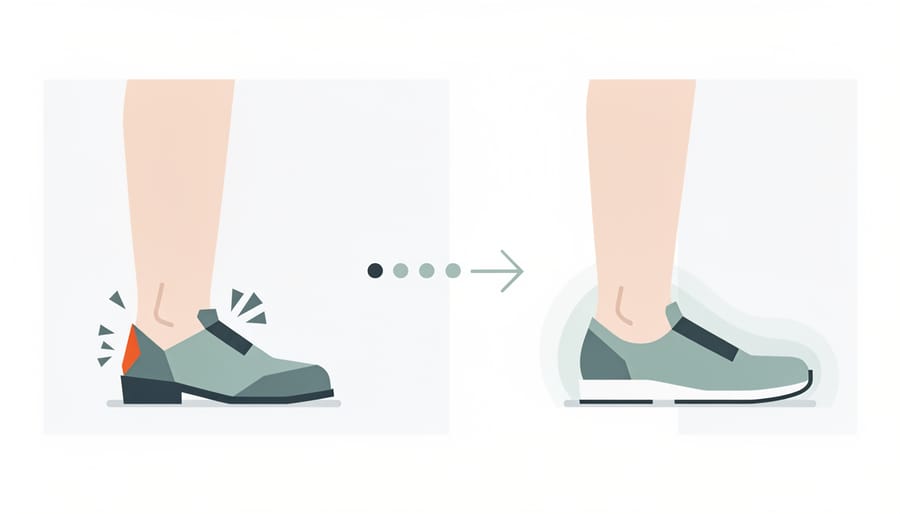
The right shoe reveals itself gradually through how your body responds. On your first run, expect a period of adjustment as your feet and legs adapt to new cushioning, support, and geometry. The shoe should feel comfortable immediately, though not necessarily identical to your old pair. Minor awareness of the new fit is normal. Sharp pain, rubbing that causes hot spots, or pressure points that make you want to remove the shoe within the first kilometer are red flags requiring immediate attention.
Over the first 50 kilometers, monitor how your body adapts. Keep notes on any discomfort, even if minor. Does a slight pressure point fade after three runs, or does it worsen? New shoes shouldn’t create problems that didn’t exist before. If you develop knee pain, shin splints, or foot soreness that persists beyond the second week, the shoe likely doesn’t match your biomechanics. Most specialty running stores in Canada offer 30-day return policies for lightly worn shoes, so act quickly if issues arise.
Track your shoe mileage from day one. Most running shoes deliver optimal performance for 600 to 800 kilometers, depending on your weight, gait, and running surfaces. Visual cues for replacement include compressed midsole foam (compare heel height to a new shoe), worn tread patterns, creasing along the midsole, or the upper separating from the sole. If your legs feel heavier or you notice decreased responsiveness during runs, your shoes may be spent even if they look acceptable.
A simple shoe log, whether in a training app or notebook, helps you retire shoes before they contribute to injury. When the shoe works, running feels effortless and your focus stays on the route ahead, not your feet.
Common Questions About Selecting Running Shoes
How often should I replace running shoes?
Most running shoes need replacement every 600-800 kilometres, though this varies based on your weight, gait, running surfaces, and shoe construction. Watch for compressed midsole foam, worn outsole tread, or new aches that appear without training changes, these signal it’s time for a fresh pair.
Can I use the same shoes for training and racing?
Yes, especially if you’re a beginner or running shorter races. Many runners find their comfortable training shoes work perfectly for race day, while experienced runners might choose lighter racing flats for speed work and competitions once they’ve built up foot strength.
Do I need different shoes for winter running in Canada?
Not necessarily for cleared paths, but winter conditions often call for shoes with better traction and water resistance. Trail shoes with aggressive lugs work well on packed snow, and some brands offer winter-specific models with insulation and enhanced grip for icy surfaces.
Should I size up when buying running shoes?
You need about a thumb’s width of space beyond your longest toe, which might mean going up half a size from your dress shoe size. Your feet swell during runs, and this extra room prevents black toenails and blisters on longer distances.
What if I have wide or narrow feet?
Many brands offer width options, look for 2E or 4E for wide feet, and B or narrow designations for slim feet. Brands like Brooks, New Balance, and ASICS typically provide more width variety than others, so test multiple options to find your best fit.
Is it worth getting custom orthotics?
Custom orthotics help runners with specific biomechanical issues, chronic pain, or significant asymmetries that off-the-shelf insoles can’t address. Start with a running specialty store’s assessment and consider consulting a sports podiatrist if problems persist despite proper shoe selection.
How do I transition to a different shoe type safely?
Introduce new shoes gradually by rotating them with your current pair, start with one or two short runs per week and increase over 4-6 weeks. This approach lets your muscles and connective tissue adapt, especially important when changing heel drop or moving toward minimalist styles.
These questions reflect what runners ask most when they’re standing in a store or scrolling through options online. The answers give you enough information to move forward confidently without second-guessing every decision. Remember that shoe selection isn’t a one-time event, your needs will shift as your training evolves, your body changes, and shoe technology advances. Stay curious, keep notes on what works, and don’t hesitate to experiment when your current setup stops feeling right.
Finding the right running shoe isn’t about discovering a single perfect model, it’s about understanding yourself as a runner. Your ideal shoe emerges from honest assessment of your gait, realistic evaluation of your training goals, and careful attention to how your body responds during those first runs. As your mileage increases, your terrain preferences shift, or your biomechanics change, revisit this selection process. What worked for your first 5K may not serve you through marathon training.
View each shoe purchase as an investment in staying injury-free and enjoying every kilometre. The upfront effort you put into proper selection pays dividends in comfort, performance, and longevity. Le Pharillon continues to support Canadian runners with practical training advice and gear insights, available in both English and French across our digital platform and print magazine. Your running journey evolves, let your shoe choices evolve with it.