

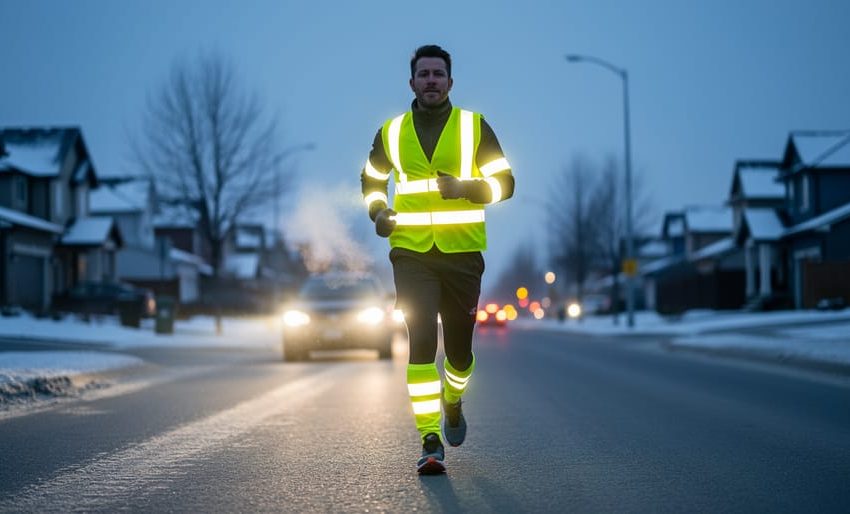
Running in low-light conditions demands one simple upgrade to your routine: reflective gear that makes you visible to drivers from at least 150 metres away. Whether you’re logging early morning kilometres before work or squeezing in an evening run after sunset, the right combination of reflective apparel and accessories can mean the difference between being seen and being invisible to motorists navigating Canadian roads in darkness, rain, or snow.
For runners across Canada, where winter darkness can stretch from 4:30 PM to 8:00 AM in many regions, understanding reflective gear isn’t optional. It’s fundamental training equipment. The physics are straightforward: retroreflective materials bounce light directly back to its source, turning car headlights into your personal spotlight. A driver travelling at 50 km/h needs approximately 25 metres to stop in good conditions. If they can’t see you until you’re 10 metres away, no amount of reaction time will prevent a collision.
The encouraging news? Effective visibility doesn’t require a complete wardrobe overhaul or expensive investment. A well-chosen reflective vest runs between $20 and $50, clip-on LED lights cost under $15, and reflective strips can transform gear you already own. The key lies in understanding how drivers scan the road, where to place reflective elements on your body for maximum recognition, and how different materials perform under varying weather conditions.
This guide breaks down everything Canadian runners need to stay visible and safe, from the science behind retroreflection to specific product categories and real-world strategies for year-round training in our challenging climate.
The Science Behind Being Seen
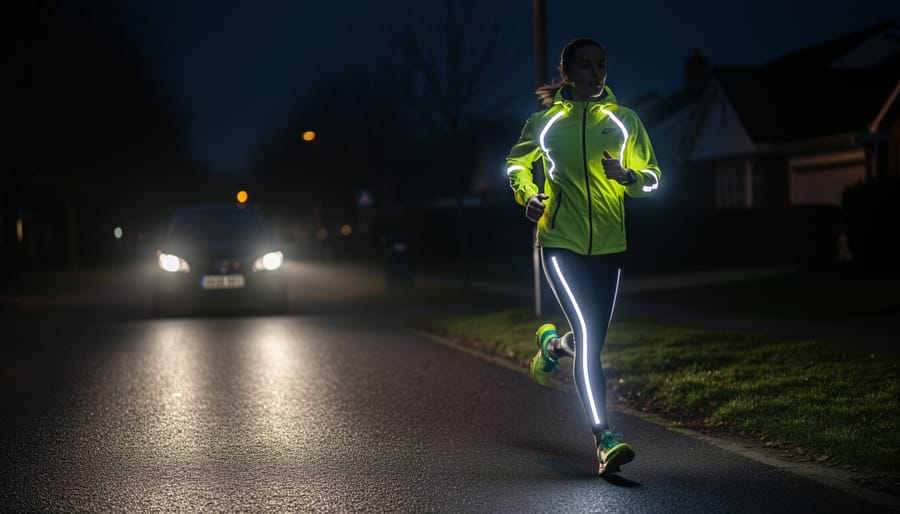
When you step out for an evening run in your dark leggings and navy jacket, you might feel visible under the streetlights. But to a driver approaching at 50 km/h, you’re practically invisible until it’s almost too late to react.
Reflective materials work through a process called retroreflection, which bounces light directly back to its source. Unlike regular fabric that scatters light in multiple directions, retroreflective material contains thousands of tiny glass beads or prismatic structures that capture headlight beams and reflect them straight back to the driver’s eyes. This creates a bright, attention-grabbing glow that stands out against dark surroundings.
The visibility difference is dramatic. Research shows that drivers can detect a runner wearing reflective gear from approximately 150 metres away, compared to just 30 metres for someone in dark, non-reflective clothing. At typical urban driving speeds, those extra seconds of detection time can mean the difference between a safe pass and a collision.
The stakes are real. While comprehensive Canadian statistics specifically tracking runner-vehicle incidents are limited, data from similar jurisdictions shows that pedestrian and runner collisions increase significantly during darker months. Studies consistently demonstrate that visibility-related incidents drop substantially when runners wear retroreflective materials.
Your eyes adjust to the ambient light around you during a run, which can create a false sense of how visible you actually are to drivers. What seems like adequate illumination from your perspective translates to poor contrast and late detection from behind the wheel. Understanding this gap between how visible you feel and how visible you actually are makes the case for reflective gear undeniable.
Essential Reflective Gear Every Runner Needs
Reflective Vests and Jackets
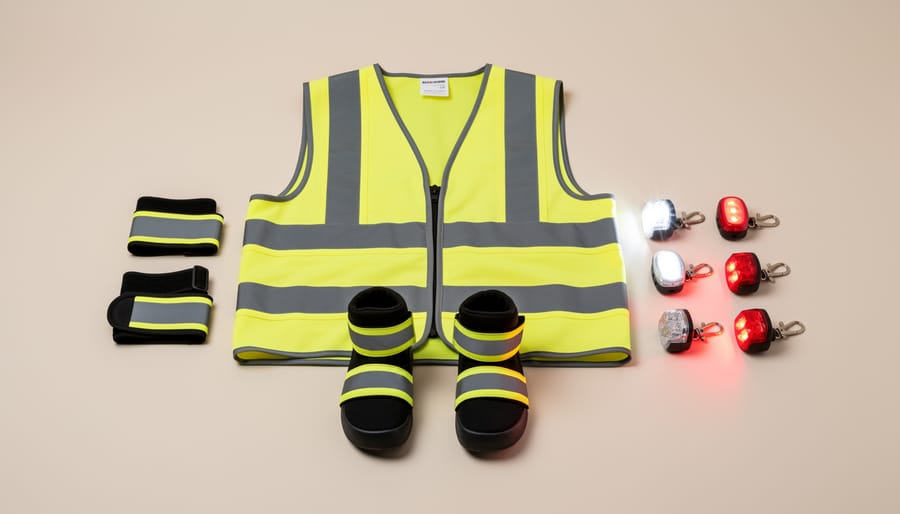
Reflective vests and jackets form the cornerstone of any runner’s visibility strategy, offering the largest surface area of reflective material your body can carry. These pieces sit at the core or outer layer of your running kit, making them highly visible from all angles when designed correctly.
The beauty of modern reflective vests lies in their versatility. For spring and summer running, mesh vests weigh practically nothing and pack down small enough to stuff in a pocket if you start before dawn and finish in full daylight. These lightweight options typically feature broad reflective stripes across the chest and back, with some models adding side panels for profile visibility. When temperatures drop into Canadian fall and winter territory, insulated reflective jackets serve double duty: keeping you warm while broadcasting your presence to drivers. Look for jackets with reflective elements integrated into the design rather than added as an afterthought.
When evaluating vests and jackets, prioritize these features:
- 360-degree reflective coverage, including side panels and sleeve details
- Breathable, moisture-wicking fabric to prevent overheating
- Adjustable fit that works over multiple clothing layers
- High-contrast reflective material (silver or yellow typically performs best)
- Secure closures that won’t bounce or shift during your run
The vest-versus-jacket decision often comes down to temperature and personal preference. Vests offer maximum breathability and work over any outfit, while jackets provide weather protection alongside visibility. Many serious runners who log miles year-round keep both options in their gear rotation, choosing based on conditions. The key is selecting pieces you’ll actually wear consistently rather than garments that stay home because they’re uncomfortable or too warm.
Reflective Accessories That Make a Difference
While vests and jackets provide excellent core visibility, strategically placed accessories can dramatically enhance how drivers perceive your position and movement on the road. These smaller items work together to create multiple points of light that help motorists judge your distance and direction more accurately.
Ankle and wrist bands deserve special attention because they create moving points of light as you run. This motion catches drivers’ eyes more effectively than static reflective panels. Position ankle bands on both legs, slightly above your running shoes, where your stride naturally creates a rhythmic flash pattern. Wrist bands serve a similar purpose for your arm swing. Look for bands with 360-degree reflectivity rather than single-sided strips.
Reflective hats and headwear add crucial visibility at eye level, making you appear more human-shaped to drivers rather than just an undefined object. Winter toques with reflective yarn woven throughout work well in Canadian conditions, while lighter caps with reflective brims or panels suit warmer evenings. Some runners prefer headlamps, which provide both illumination and a bright forward-facing signal.
Gloves with reflective elements on the backs enhance hand visibility during arm swing, particularly useful when signaling at intersections or acknowledging drivers. Choose gloves where reflective material covers the entire back surface rather than just small logos.
Clip-on LED lights offer active visibility that complements passive reflective materials. Attach them to your waistband, shoulder straps, or the back of your hat for blinking alerts that work even when headlights aren’t shining directly on you.
Reflective Shoes and Apparel Integration
Modern running shoes and apparel have moved far beyond awkward reflective strips slapped onto dark fabrics. In 2026, reflective elements are seamlessly integrated into the design itself, offering both safety and style without compromise.
Most major running shoe brands now incorporate reflective materials into heel counters, toe boxes, and along the lateral sides of shoes. These strategically placed elements catch light from multiple angles as your feet move through their stride cycle, creating a distinctive flickering pattern that draws driver attention. The technology has evolved from basic reflective tape to woven reflective threads and heat-transfer materials that maintain their visibility through hundreds of kilometres without peeling or cracking.
Running apparel has undergone a similar transformation. Modern technical shirts, tights, and shorts feature reflective threading woven directly into the fabric rather than added as afterthought patches. You’ll find subtle geometric patterns, brand logos, and design lines that look sleek during daylight but illuminate dramatically when headlights sweep across them. Some manufacturers use reflective yarn in seams, creating a glowing outline of your body shape that helps drivers judge your position and movement more accurately.
The best approach combines both elements. Pair reflective running shoes with a shirt or tights that have integrated reflective panels across your torso and legs. This creates multiple points of visibility across your body, making you recognizable as a runner rather than just an undefined light source. The result is comprehensive coverage that doesn’t require you to load up with separate accessories.
Choosing the Right Reflective Gear for Your Running Routine
Your gear choices should match where, when, and how you run. A reflective vest that works perfectly on well-lit city streets might leave you invisible on a dark rural road, while a dawn runner in summer has different needs than someone who tackles evening runs during a Canadian January.
Matching Gear to Your Environment and Schedule
Urban runners benefit from strategic accent pieces. City streetlights provide baseline visibility, so reflective ankle bands, a vest, and tech running shirts with reflective threading often suffice. The key is breaking up your silhouette so drivers can immediately identify you as a runner, not just another pedestrian. Focus reflectivity at your legs and torso where movement is most obvious.
Rural and trail runners need maximum coverage. Without streetlights, you’re competing with darkness itself. A full reflective jacket or vest with 360-degree visibility becomes essential, combined with ankle bands and preferably a headlamp. The goal is to be visible from every angle, since cars may approach from unexpected directions on winding country roads.
| Running Scenario | Essential Gear | Additional Recommendations |
|---|---|---|
| Urban Dawn/Dusk | Reflective vest, ankle bands | Clip-on blinker, reflective hat |
| Rural Evening | Full reflective jacket, 360° visibility | Headlamp, multiple LED lights |
| Canadian Winter Runs | Insulated reflective jacket, reflective gloves | Reflective elements on winter layers |
| Trail/Mixed Terrain | Reflective vest, headlamp, ankle bands | Reflective backpack if carrying gear |
Weather plays a major role too. Winter demands layering reflective pieces over your cold-weather tights and better winter pants which means choosing vests or jackets that fit comfortably over bulkier clothing. Rain reduces visibility dramatically for drivers, so wet weather calls for your most reflective gear regardless of the time of day.
Dawn runners can often get away with less gear than evening runners, since visibility improves steadily as you run. Evening joggers face the opposite problem: darkness deepens as you go, making comprehensive reflectivity non-negotiable from the start.
Beyond Reflective: Combining Visibility Strategies
Reflective gear performs best as one component of a comprehensive visibility strategy rather than your sole safety measure. Think of it as building layers of protection, each adding to your detectability from different angles and distances.
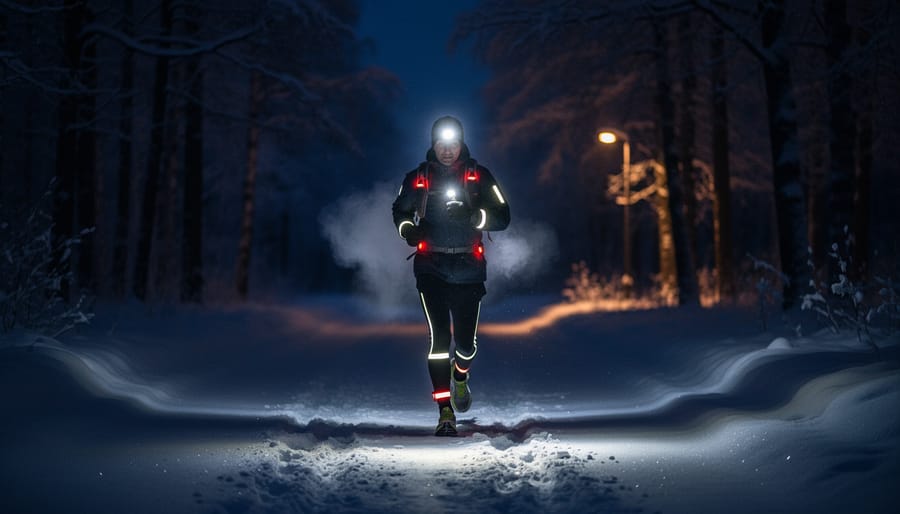
Active lighting complements reflective materials by making you visible even when no headlights are present to bounce off your gear. A headlamp not only illuminates your path but signals your presence to others. Clip-on LED blinkers attached to your waist, shoulders, or ankles create moving points of light that catch drivers’ attention more effectively than static reflective strips. Red rear-facing lights are particularly valuable, as they communicate direction of travel to approaching vehicles.
Route selection matters as much as what you wear. Well-lit streets, paths with streetlamps, or trails near ambient light sources reduce your dependence on passive reflectivity alone. When possible, choose routes with sidewalks or dedicated running paths that create physical separation from traffic. In urban areas, stick to busier streets where multiple light sources improve overall visibility.
Weather conditions require adjustments to your visibility plan. Fog, rain, and snow diminish the effectiveness of both reflective gear and active lights, so double up on both during poor conditions. Your performance apparel might be technical and comfortable, but visibility trumps everything else during low-light runs.
Consider running with a partner when conditions are particularly challenging. Two reflective, lit runners create a larger visual presence than one, and there’s safety in numbers beyond just visibility.
Caring for Your Reflective Gear
Your reflective gear only works when it can actually reflect light back to drivers. Heat, friction, and improper washing gradually degrade those reflective elements, sometimes leaving you with gear that looks fine but provides minimal visibility.
Always wash reflective items inside out on a gentle cycle with cold water. Skip the fabric softener completely, it coats the reflective particles and reduces their effectiveness. Air drying is best, but if you must use a dryer, choose low heat. High temperatures can cause reflective tape and prints to crack, peel, or lose their luminosity.
Store your gear in a cool, dry place away from direct sunlight. Folding reflective vests and jackets loosely prevents creasing that can damage reflective strips. Avoid leaving items in hot cars during summer, as extreme heat accelerates material breakdown.
Inspect your gear regularly under car headlights or a flashlight. If strips appear dull or cracked, or if they no longer produce that distinctive bright reflection, it’s time to replace them. Most quality reflective elements last one to two years with regular use, though this varies by brand and how often you run. Compromised reflectivity isn’t just worn-out gear, it’s a genuine safety risk during those dark Canadian mornings and evenings.
Reflective gear represents one of the simplest yet most impactful investments you’ll make as a runner. For less than the cost of a decent pair of running socks, you can dramatically increase your visibility and reduce your risk on the road.
Canadian runners know that our fall and winter months bring extended darkness, making reflective gear not just helpful but essential. When you’re heading out for a 6 a.m. run in November or squeezing in evening miles after work, being seen isn’t optional, it’s survival.
Make visibility a non-negotiable part of your running kit, right alongside your shoes and water bottle. Check your gear before every low-light run, replace items that have lost their reflectivity, and don’t compromise on safety to save a few dollars.
The good news? You don’t have to choose between running when it suits your schedule and staying safe. With proper reflective gear, you can confidently head out at dawn, dusk, or after dark, knowing you’ve done everything possible to protect yourself. Your running routine shouldn’t be dictated by daylight hours, equip yourself properly, and run on your terms.