

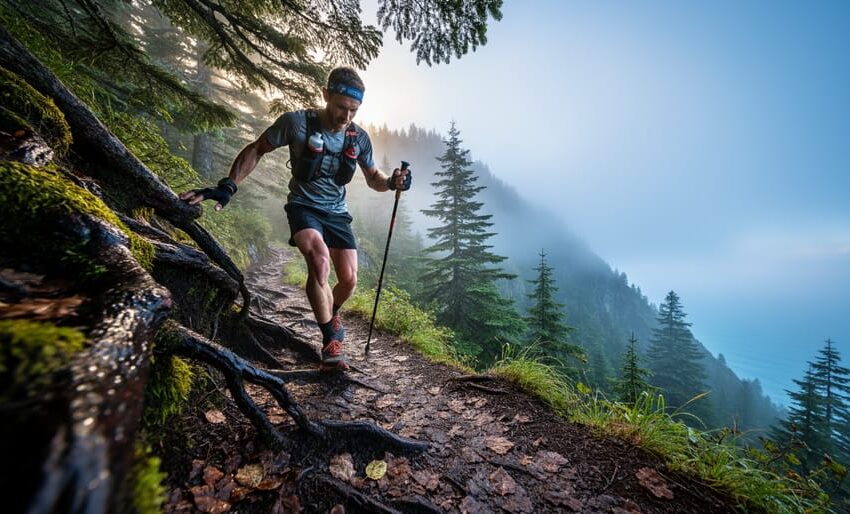
Coast mountain trail running blends technical singletrack scrambles with alpine views, typically starting near sea level and climbing thousands of feet through temperate rainforest and subalpine terrain in a single outing. It’s a discipline that has taken root in British Columbia’s Coast Range and the Pacific Northwest, where runners tackle steep, rugged trails linking ocean and summit in races that range from punchy 13-kilometre efforts to 100-kilometre epics.
What sets this style apart is the sheer vertical gain packed into relatively short horizontal distances. A typical coast mountain race might climb 1,500 metres in 25 kilometres, demanding a blend of power hiking, scrambling technique, and descending confidence on loose rock and root-laced trails. The terrain shifts quickly from moss-draped old growth to exposed ridgelines where weather can turn in minutes, so route-finding skills and adaptable layering are as important as cardiovascular fitness.
The 2026 calendar illustrates the range of entry points. Run Ridge Run on February 21 in Port Moody offers 13-kilometre and 25-kilometre distances, hosted by Salomon Coast Mountain Trail Running as a gateway event. Mid-season races like Survival of the Fittest on May 9 and the Whistler Half Marathon on June 6 sit in the sweet spot for spring fitness, while the Alpenglow 100 on July 3 to 4 tests multi-day endurance in peak alpine conditions.
If you’re accustomed to flatter trail networks or road racing, the transition requires specific preparation. Quad-strengthening descents, trekking pole technique, and learning to manage effort on sustained climbs all become part of your training toolkit. The payoff is access to landscapes that few runners outside this region experience, a tight-knit community that values both grit and humility, and the satisfaction of summiting under your own power.
Understanding the Coast Mountain Trail Running Scene
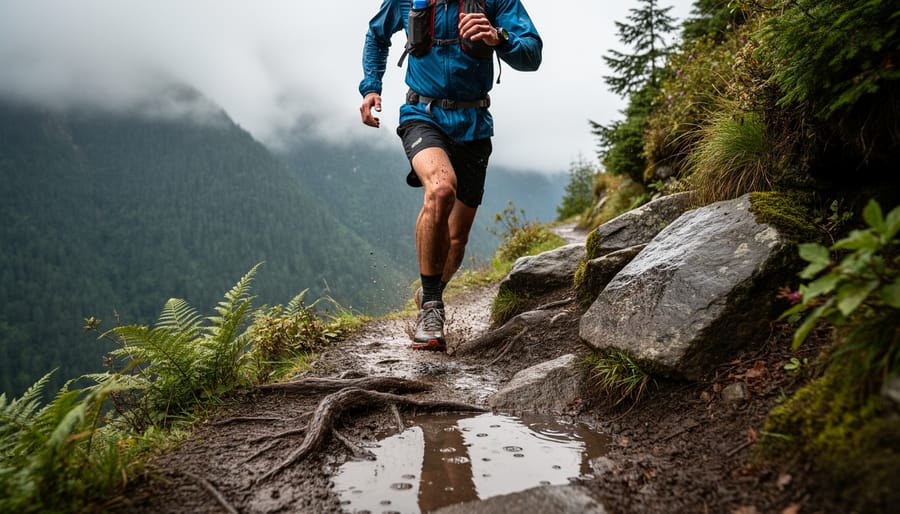
Coast Mountain trail running occupies a unique space in the trail running world, defined by the dramatic geography of British Columbia’s coastal ranges. These trails drop runners into a landscape shaped by temperate rainforest, steep coastal mountains, and year-round precipitation that transforms trails into technical, root-laced corridors requiring constant footwork adjustment. Unlike the drier, more predictable terrain of interior mountain ranges, coast mountain trails demand adaptability, you’re navigating slick rocks, exposed roots, and muddy sections even in summer, while managing climbs that can gain 300 metres per kilometre on popular routes.
What sets this scene apart is the tight-knit community that’s emerged around these conditions. Organizations like Salomon Coast Mountain Trail Running (CMTR) have built an accessible event calendar that welcomes everyone from first-time trail runners to seasoned ultrarunners. CMTR hosts races like Run Ridge Run at White Pine Beach in Port Moody and Buckin’ Hell at Enquist Lodge on Mount Seymour, creating entry points across the Lower Mainland’s trail networks. The vibe leans grassroots and inclusive rather than elite-focused, events often feature shorter technical options alongside longer ultras, reflecting a philosophy that coast mountain running is about mastering terrain, not just logging distance.
This accessibility has expanded rapidly. Races now dot the calendar from February through summer, offering runners regular opportunities to test themselves against coastal conditions without needing to commit to remote wilderness expeditions. The trails themselves remain wild and demanding, but the community infrastructure makes getting started more approachable than ever.
2026 Coast Mountain Trail Running Events Worth Knowing
The 2026 calendar offers a strong lineup of coast mountain trail running events that demonstrate the range of experiences available to runners in British Columbia. From single-day technical races to multi-day ultra challenges, these events showcase different aspects of the terrain and community that define this discipline.
| Event | Date | Location | Organizer/Notes |
|---|---|---|---|
| Run Ridge Run | February 21 | White Pine Beach, Port Moody, BC | Salomon Coast Mountain Trail Running (13 km and 25 km distances) |
| Diez Vista | April 11 | BC | Check event site for distance details |
| Survival of the Fittest | May 9 | BC | Check event site for distance details |
| Whistler Half Marathon | June 6 | Whistler, BC | Check event site for course details |
| The Alpenglow 100 | July 3-4 | BC | Multi-day ultra event |
Run Ridge Run kicks off the season in late February, offering runners an early chance to test their winter training on coastal terrain. As an event hosted by Salomon Coast Mountain Trail Running, it provides a well-supported introduction to the community and the technical demands of trails in the Port Moody area.
Spring brings Diez Vista in mid-April and Survival of the Fittest in early May. These events build on the season’s momentum and typically attract runners ready for more sustained vertical challenges as conditions improve and daylight extends.
The Whistler Half Marathon in early June sits at the intersection of trail and mountain running, drawing participants to one of BC’s most recognizable mountain destinations. By early July, The Alpenglow 100 represents the upper end of the spectrum, a two-day ultra that tests endurance and technical skills across extended mountain terrain.
This spread of events shows how coast mountain trail running accommodates different goals and experience levels. Newer runners can enter through shorter distances in established events, while those seeking multi-day challenges have options that push both fitness and navigation skills. Check individual event websites for current registration details and specific course information.
Preparing for Coast Mountain Terrain
Building Vertical Strength
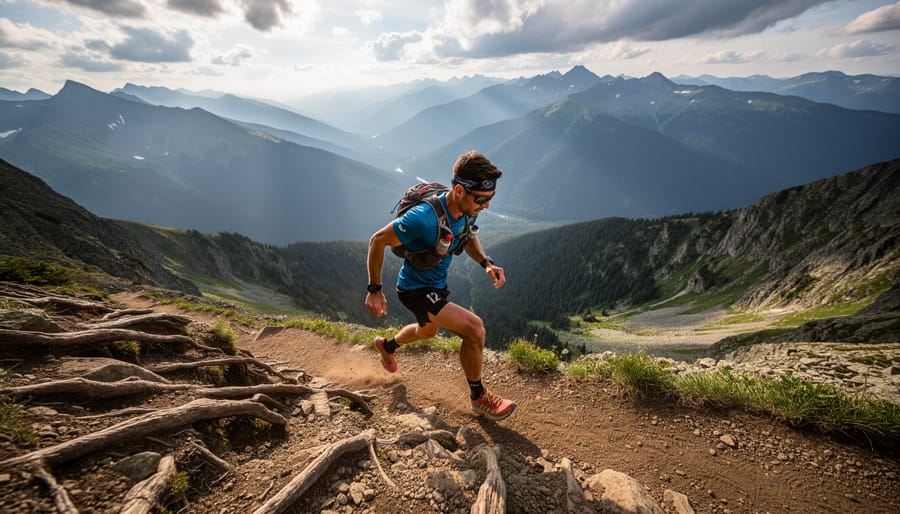
Sustained vertical gain demands eccentric strength your flat routes never build. Coast mountain trails in BC routinely stack 300-500 metres of elevation per hour, then reverse it on technical descents that punish undertrained quads.
Start with stair or hill repeats twice weekly: find a sustained climb you can run for three to five minutes, push hard uphill, jog down as recovery, and repeat four to eight times. Gradually extend the climb duration as your legs adapt. Treadmill incline work translates poorly to real trail gradients, seek actual hills whenever possible.
For descents, practice controlled speed on moderately technical downhills to build confidence and eccentric quad strength. The downhill running eccentric effects on muscle demand recovery time, so schedule these sessions with rest days following.
Add weighted step-ups, lunges, and single-leg squats to build stability through the full range of motion coast mountain terrain demands. Split squats mimic the uneven stance you’ll hold navigating roots and rocks.
Consistency matters more than intensity early on. Two focused vertical sessions weekly for six to eight weeks will transform how you handle the climbs and descents at events like Run Ridge Run or Diez Vista.
Technical Footwork and Terrain Adaptation
Developing sure footing on coastal BC trails comes down to practice and presence. These surfaces demand constant micro-adjustments that road running never teaches you.
Start on familiar trails at a conversational pace, forcing yourself to look three to five steps ahead rather than directly at your feet. Your peripheral vision picks up immediate obstacles while your eyes map the line you’ll take. This forward gaze becomes automatic with repetition, letting you flow through technical sections instead of stuttering over each root.
Shorten your stride on uneven terrain. Quick, lighter steps give you more opportunities to correct your balance and reduce impact when you land on an angled rock. Practice lifting your feet deliberately rather than shuffling, especially when fatigue sets in and toe strikes become more common.
Wet roots and moss-covered rocks require different strategies than dry trail. On slick surfaces, place your foot flat and commit your weight smoothly rather than tentative tiptoeing, which invites slips. Seek out stable edges and textured spots. Running the same trail in varied conditions builds this reading skill faster than anything else.
Downhill technical sections test your nerve as much as your footwork. Lean slightly forward, keep your core engaged, and let your legs act as suspension. Trust develops through controlled repetition, not by charging blindly into terrain that exceeds your current skill level.
Essential Gear Considerations
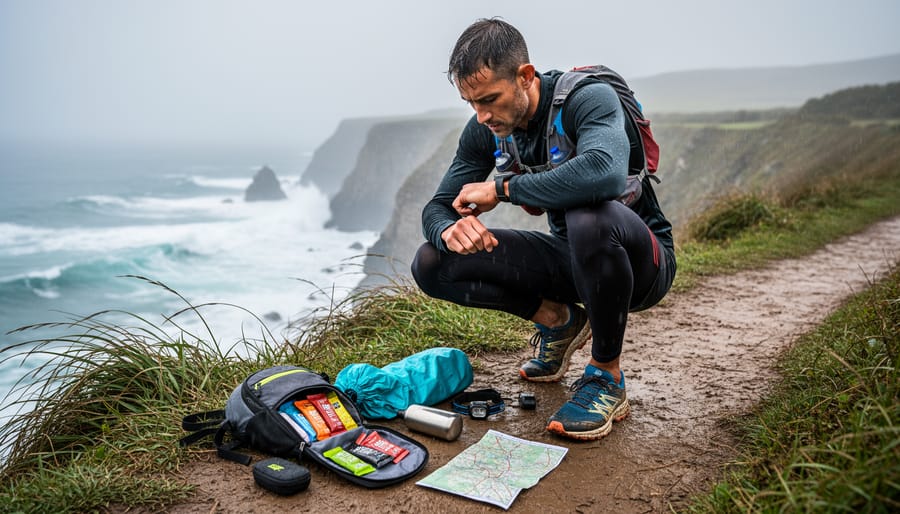
Coast mountain trails demand gear that handles moisture, grip, and rapid weather shifts. Your kit doesn’t need to be extensive, but each piece should earn its place on steep, technical terrain.
Footwear makes the biggest difference. When you choose trail shoes for coastal BC conditions, prioritize aggressive tread patterns and sticky rubber compounds that hold on wet roots and moss-covered rocks. A snug midfoot and protective toe box help on technical descents. Many runners size up a half size to accommodate foot swelling on long climbs and give toes clearance on downhills. Waterproof membranes sound appealing but often trap moisture from sweat and stream crossings; most experienced coast mountain runners accept wet feet and focus on shoes that drain quickly.
Layering matters more than any single perfect jacket. Coastal weather shifts from cool fog to bright sun within an hour. A moisture-wicking base layer, lightweight insulating mid-layer, and packable wind shell cover most conditions without dead weight in your pack. Arm sleeves or a vest give you options between full layers. In spring and fall, gloves and a light toque weigh nothing but transform comfort when clouds roll in at elevation.
For hydration and nutrition on vertical efforts, carrying capacity trumps minimalism. Sustained climbs burn more energy than flat trail miles, and refill points are rare. A vest or belt that holds 500-750ml of water plus gels, bars, or real food keeps you fueled through longer outings. Test your system on training runs to avoid gut issues on race day. Pack slightly more than you think you need; mountain weather and underestimated effort make reserves worthwhile.
Nutrition and Fueling for Mountain Efforts
Mountain running demands more from your body than flat terrain, and your fueling strategy needs to match that reality. Sustained climbs burn through glycogen faster, while technical descents require constant focus that can suppress your appetite even as your energy stores deplete.
Pre-run fueling matters more for vertical efforts. Aim to eat a carbohydrate-rich meal two to three hours before heading out, giving your body time to digest without feeling heavy on the climbs. For runs under ninety minutes on moderate terrain, this baseline fueling often suffices. Beyond that threshold, you’ll need to refuel during the effort.
On-trail nutrition becomes critical for longer mountain adventures. Pack easily digestible carbohydrates, gels, chews, or whole food options like dates or energy bars, and consume them consistently rather than waiting until you bonk. The key is eating before you’re hungry and implementing strategic hydration before you’re thirsty. Coastal BC’s variable conditions mean you might sweat heavily on exposed climbs yet cool rapidly in shaded forest sections, making regular small sips more effective than sporadic gulping.
Recovery nutrition starts within thirty minutes of finishing. Combining protein and carbohydrates helps replenish depleted stores and supports muscle repair after the eccentric load of long descents. Chocolate milk, recovery drinks, or a balanced meal all work, what matters is consistency and timing, not perfection.
Common Questions About Getting Started
Your road running base translates well to trail running, you already have the cardiovascular fitness and mental endurance. The main adjustments involve adapting to uneven terrain, managing elevation changes, and slowing your pace on technical sections. Many runners start by mixing in one trail run per week alongside their road sessions, gradually building comfort with roots, rocks, and variable footing.
Do I need trail running experience to start?
No prior trail experience is required. Events like Run Ridge Run welcome beginners, and starting with shorter distances on well-marked trails builds confidence before tackling more technical terrain.
How much elevation gain should I train for?
Start with routes offering 100-200 metres of gain per run, then gradually increase as your legs adapt. For coast mountain events, building to 400-600 metres in training prepares you well for race day efforts.
What’s the best way to find local trail running groups?
Check with running specialty stores in Vancouver and the North Shore, follow Salomon Coast Mountain Trail Running on social media, and look for group runs posted on local trail running forums.
How does coastal weather affect trail conditions?
Rain makes roots and rocks slippery, so grip becomes crucial. Trails drain differently, some stay muddy for days while others clear quickly, so check recent trip reports before heading out.
Choosing your first event comes down to distance and elevation that feel challenging but manageable. The February and April races offer good entry points before summer heat arrives. Look for events with aid stations, clear course marking, and cutoff times generous enough to let you hike steep sections without pressure. Local resources matter: connecting with experienced trail runners helps you discover beginner-friendly places to trail run and understand trail etiquette like yielding on narrow sections and packing out what you bring in.
Coast mountain trail running offers Canadian runners a distinctive challenge that’s both accessible and deeply rewarding. Whether you’re drawn to a crisp February morning on the trails at White Pine Beach or a midsummer ultra across alpine terrain, this discipline welcomes runners at every level. The community-oriented events, varied distances, and stunning BC landscapes create entry points for beginners testing their first technical descent and seasoned runners chasing multi-day adventures alike.
Start where you are. Explore a local trail, connect with groups like Salomon Coast Mountain Trail Running, and build your skills gradually. Subscribe to Le Pharillon for updates on upcoming events, training strategies, and nutrition guidance tailored to Canadian mountain runners, available in digital and print formats, in both English and French.