

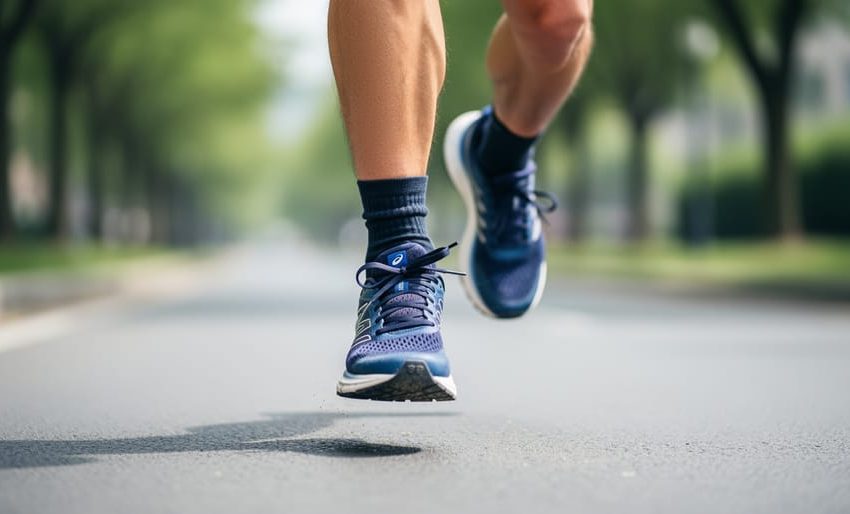
The simplest way to start running is to run, then walk. Jog for one to five minutes, walk for as long as you need, and repeat that cycle three to five times. No heroics, no pace targets. Just time on your feet, a few days a week, with the running portions growing a little longer as your body adapts.
That’s the whole method, and it works because it lets your breathing, muscles, and tendons catch up with your enthusiasm. Most beginners quit not from lack of motivation but from doing too much too soon.
What you wear matters more than you’d think, especially in month one. A pair of running shoes that fits well, with room for your toes to move, and socks that wick moisture and cut down on friction can be the difference between a run you enjoy and a blister that sidelines you for a week. Merino wool and moisture-wicking fabrics are worth a look. You don’t need a closet full of gear, just a few smart choices.
This guide walks you through your first-month checklist, a step-by-step plan, the signs that tell you to stop, and how to know it’s working. Let’s get you out the door.
What You Actually Need for Your First Month of Running
Choosing Your First Pair of Running Shoes
Your first pair of running shoes should fit well and suit the ground you’ll actually run on. Everything else is secondary.
Start with toe room. Your toes need space to spread as your feet swell a little during a run, and a cramped toe box is a fast route to sore feet and blisters. Fit guides that compare road and trail shoes both stress toe room, along with grip. Road shoes are built for pavement and paths, while trail shoes add grip for dirt, roots, and loose ground. If you’ll mostly run on sidewalks and paved routes, a road shoe is the natural match.
A few practical fitting tips:
– Try shoes on with the socks you’ll run in, since sock thickness changes how a shoe feels.
– Leave room in front of your longest toe, and check that your heel stays put without rubbing.
– Walk around the store, then jog a few steps if you can. A shoe that feels fine standing still can feel different in motion.
Fit also plays a big part in preventing blisters while running, because friction from a loose or tight spot is what starts them.
That last point matters more than it sounds. A beginner marathon checklist notes that first-time marathoners often buy new shoes a week before the race, which leaves no time to learn how they feel over real miles. Buy early, wear them on your regular runs, and let your feet get to know them before race day.
Why Running Socks Are Worth the Upgrade
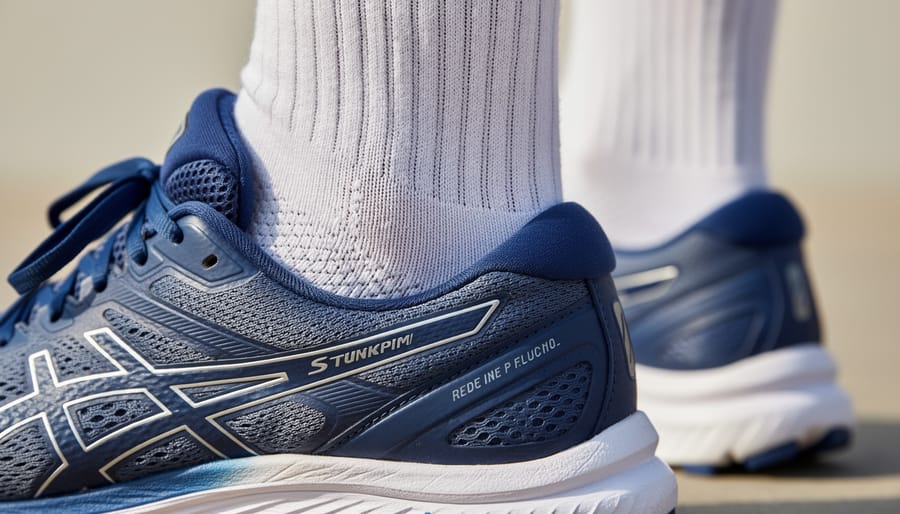
Socks are the cheapest upgrade you can make, and one of the most noticeable. The right pair helps manage sweat, reduce friction that leads to blisters, prevent bunching, and keep your feet more comfortable from the first step to the last.
Fabric matters most. Look for moisture-wicking materials that pull sweat away from your skin so your feet stay drier. Natural fibers like merino wool are a popular choice because they’re breathable, moisture-wicking, and naturally odor-resistant, which is handy when your shoes live in a gym bag.
As your runs get longer, a little added cushioning and arch compression may help you stay comfortable as the miles tick by. You don’t need heavy padding. Just enough to take the edge off. If you’re heading onto trails, choose socks that fit securely and are built to minimize friction, because a sock that slides around inside a trail shoe is a blister waiting to happen.
Here’s a simple first-month gear checklist to keep your shopping focused:
- Essential: Running shoes that fit well, because comfort and toe room set the tone for every run.
- Essential: Running socks, to manage sweat, cut friction, and avoid bunching.
- Essential: Comfortable, moisture-managing clothing, so sweat and chafing don’t cut your run short.
- Nice to have: A way to track time or intervals, which makes run-then-walk sessions easier to follow.
- Nice to have: A breathable extra layer, useful when the weather swings between warm-up and cooldown.
Start with the essentials, and add the rest only if you find you need it.
The Few Extras Worth Buying (and What Can Wait)
Once your shoes and socks are sorted, you honestly don’t need much else. A full wardrobe and expensive tech can wait, and plenty of runners never buy them at all.
A couple of extras do make sticking with it easier. Breathable layers are one, since clothing that lets sweat escape keeps you comfortable and less likely to talk yourself out of the next run. Choose what suits the weather where you live, and layer so you can peel something off once you warm up.
A simple way to keep time is the other. Your run-then-walk intervals work best when you aren’t guessing, so a basic watch, a phone timer, or a free app is plenty. Use whatever you already own.
Anything beyond that is optional. Some runners love data and gadgets, others prefer to run by feel, and both approaches are valid. Start small, notice what you actually miss, and only then decide whether something earns a spot in your kit.
Safety First: Before You Lace Up
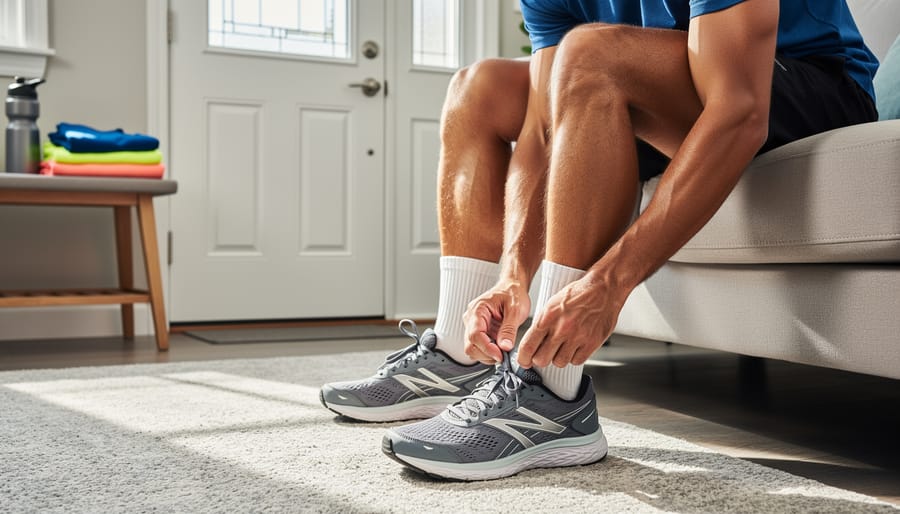
Starting to run is exciting, and a few simple habits keep it safe and enjoyable. If you have a medical condition or any health concerns, check in with a health professional first. It’s a quick conversation that gives you peace of mind.
Before each run, spend a few minutes warming up with a brisk walk and some easy leg swings. Then keep your effort conversational. If you can chat in short sentences, you’re in the right zone, and that’s plenty for a beginner.
Gear matters here too. When you pick the best sneakers for your feet, you lower the chance of nagging aches that derail your first month. Choose well-lit, familiar routes, wear something visible, and let someone know where you’re headed.
Hydration counts as well. Sip water through your day, and read up on strategic hydration as your runs get longer.
Listening to your body isn’t a sign of weakness. It’s how every runner stays in the game long enough to enjoy it.
Your First Weeks: A Simple Run-Then-Walk Routine
Pacing, Progress, and Staying Motivated
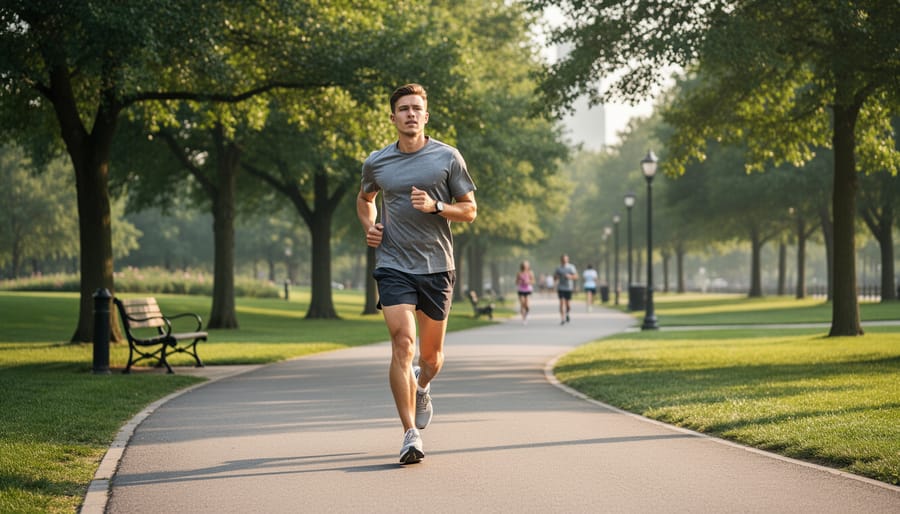
The easiest way to judge your effort is the talk test: if you can speak in short sentences while you run, you’re at the right pace. If you’re gasping, slow down or take a walk break. Running slowly is not a flaw, it’s how beginners build a base.
Here’s how a first session can look:
- Check that your shoes and socks fit, with room for your toes and no bunching.
- Warm up with a brisk walk.
- Run for one to five minutes at an easy, conversational effort.
- Walk for as long as you like.
- Repeat the run-and-walk pattern three to five times.
- Cool down and note how your feet and body feel.
Once a session feels comfortable, stretch your run intervals a little at a time, maybe by a minute, and keep the walk breaks you still need. Progress at your own pace, not anyone else’s.
Consistency matters more than speed, so pick days that fit your schedule and treat them like appointments. Consider joining a local running group or club too, since a friendly crowd makes showing up easier. And share your milestones, whether it’s your first full run interval or your first week completed. Every one of them counts.
How to Check Your Gear Is Working (and What to Do Next)
After your first few runs, take a minute to check how your feet and gear held up. Look for blisters or hot spots, and notice whether your toes had room to move, your socks stayed put without bunching, and your feet felt dry and comfortable by the end. Those are all signs your kit is doing its job.
If something felt off, small tweaks often solve it. Try a different sock, since the right pair can help manage sweat, cut friction and stop bunching. Re-lace your shoes to loosen a tight spot or snug a heel that slips. If your toes still feel cramped, a different size may be the fix. Give each change a couple of runs before judging it.
Once you’re comfortable, the next step is consistency. Aim to repeat your run-then-walk sessions weekly, and lengthen your run intervals at your own pace. Our guide on how to stick with running is a good follow-up, and later you can explore local events when you’re ready.
Beginner Running Gear: Common Questions
How long should a beginner run?
Start small: run for one to five minutes, then walk for as long as you want, and repeat that three to five times. There’s no set clock to beat, so let comfort guide how long you go.
Is it okay to walk during a run?
Absolutely. Walk breaks are a built-in part of the run-then-walk method, and they still count as time on your feet. Many new runners find they can stretch their running stretches longer once they stop treating walking as failure.
Do I need special running socks?
You don’t need a drawer full, but one good pair is worth it. The right running socks help manage sweat, reduce friction that leads to blisters, and keep your feet comfortable by preventing bunching. Merino wool is a popular choice because it’s breathable, moisture-wicking, and naturally odor-resistant.
Can I run in trail shoes on the road?
You can, but road and trail shoes are built differently, with differences in fit, toe room, and grip. Match the shoe to where you’ll spend most of your miles, and try it on with the socks you plan to run in.
When should I buy new shoes before a race?
Well before race day. First-time marathoners often buy new shoes a week before the race, which leaves little time to find out whether they fit comfortably. Get your shoes early and run in them a few times first.
A few quick habits tie these answers together. Keep your effort easy enough to chat, treat every walk break as part of the plan, and test any new gear on a short, low-stakes outing before you rely on it. If something rubs or pinches, adjust it early rather than pushing through. Small fixes, like a different sock or a slightly different lacing, often solve problems before they turn into blisters.
Every runner you admire started exactly where you are now: standing at the door, a little unsure, wondering if this will really work. It will. All you need is a pair of shoes that fit, a decent pair of socks, and a gentle run-then-walk session to get going. Run for a minute or two, walk when you feel like it, and repeat. That’s it. There’s no pace to hit and no one keeping score.
Give yourself the first month to build the habit, and let comfort guide your choices. The distance and the speed will come on their own.
If you’d like company along the way, subscribe to Le Pharillon for more Training Tips for Beginners. You can read us digitally or in print, in French or English, whichever suits you best. Lace up, step outside, and enjoy that first run. We’re cheering for you.