


Start with your local running specialty store to get properly fitted running shoes and connect with knowledgeable staff who understand Canadian terrain and climate conditions. These retailers often host free group runs and clinics that provide both guidance and built-in accountability for new runners.
Download free training apps like Couch to 5K or Nike Run Club that provide structured, progressive programs designed specifically for beginners, eliminating guesswork about distance, pace, and rest days. These digital tools adapt to your schedule and offer audio coaching during runs, making professional guidance accessible without overwhelming investment.
Join community running groups through platforms like Parkrun Canada or local running clubs, where experienced runners share proven training methods, route recommendations, and seasonal gear advice relevant to your region. The social aspect transforms solo training into a supportive network that sustains motivation through challenging Canadian winters.
Tap into expert resources from national organizations like Athletics Canada and Running Magazine, which provide evidence-based training plans, injury prevention strategies, and nutrition guidance tailored to runners at every level. These trusted sources cut through conflicting online information with clear, actionable recommendations that respect both beginner limitations and growth potential.
The right resources eliminate confusion and accelerate progress. Whether you prefer digital tools, in-person community, or expert guidance, strategic selection of quality resources transforms overwhelming information into a clear path forward, helping you build confidence and consistency from your very first run.
Finding Your Training Plan (Without Getting Overwhelmed)
Free vs. Paid Training Programs
Starting your running journey doesn’t require a significant financial investment, but understanding when to spend money can accelerate your progress. Free resources offer tremendous value, especially when you’re testing the waters. YouTube channels provide visual running form tutorials, while podcasts deliver motivation during recovery walks. Websites like Running Room Canada and local running club pages share training plans, injury prevention tips, and community event listings at no cost. These resources help you build foundational knowledge and determine what type of guidance resonates with you.
Paid options become valuable as your commitment grows. Premium apps like Runkeeper Elite or Strava Summit offer personalized training plans that adapt to your progress, detailed analytics, and structured workout guidance. For beginners, these typically range from $5-15 monthly, providing accountability that free alternatives sometimes lack. Coaching services, whether virtual or in-person, represent a larger investment but deliver customized programming and form corrections that prevent injuries and bad habits. Many Canadian coaches offer introductory packages, making professional guidance more accessible than you might expect.
The sweet spot for most new runners combines free educational content with one paid accountability tool. Start with free resources to learn the basics, then invest in a coaching app or join a paid running clinic once you’ve maintained consistency for several weeks. Remember, the best resource is the one you’ll actually use. A free training plan you follow beats an expensive coach you ignore. As you progress, reassess what support helps you stay motivated and injury-free, adjusting your investment accordingly.
Canadian-Specific Running Resources
Canada offers exceptional support systems for runners at every level, making it easier than ever to connect with like-minded athletes and access quality training guidance. The Running Room stands out as a national treasure, with locations coast to coast offering free group runs, clinics, and expert staff who understand the unique challenges of training through Canadian seasons. Their learn-to-run programs have helped thousands of beginners take their first confident steps.
Provincial athletics associations provide another valuable layer of support. Organizations like Athletics Ontario, BC Athletics, and Athletics Alberta connect you with certified coaches, sanctioned events, and regional training groups. These associations often maintain directories of local running clubs, helping you find community right in your neighbourhood.
Local running clubs remain the heart of Canada’s running community. From casual social runs to structured training groups, clubs welcome runners of all paces and create accountability that keeps you motivated through long winters. Many offer bilingual programming in French and English, ensuring accessibility across the country.
Don’t overlook community centres and sports stores beyond the Running Room. Many host weekly group runs and maintain bulletin boards listing local events and training partners. University and college running clubs often welcome community members too, expanding your options for finding the right training environment.
The Gear That Actually Matters (And What Can Wait)
Getting Fitted for Your First Pair of Running Shoes
Finding the right running shoes is one of the most important investments you’ll make as a new runner. Unlike casual sneakers, proper running shoes provide support tailored to your unique biomechanics, helping prevent injury and making every run more comfortable.
The secret to finding your perfect pair lies in professional gait analysis. This process involves running on a treadmill or short track while trained staff observe or record how your foot strikes the ground. They’ll identify whether you pronate (roll inward), supinate (roll outward), or have a neutral stride. Don’t worry if these terms sound technical—the staff will explain everything in plain language and recommend shoes that complement your natural movement patterns.
Specialty running stores across Canada offer complimentary gait analysis and fitting services. Major chains like The Running Room, with locations nationwide, and Running Free in Ontario provide expert guidance. In Quebec, look for Boutique Courir or Distances, where you can access services in French. British Columbia runners can visit Forerunners, while Prairie provinces are served by stores like Running Gear Canada.
When visiting a specialty store, wear the socks you’ll run in and bring any orthotics if you use them. Plan to spend at least 30 minutes trying different models. A proper fit means about a thumb’s width of space between your longest toe and the shoe’s end, with snug heel support that doesn’t slip.
Remember, the most expensive shoes aren’t necessarily the best for you—focus on fit and feel over brand names or flashy designs.
Beyond Shoes: Must-Haves and Nice-to-Haves
Once you’ve got your shoes sorted, a few additional items will make your running experience safer and more comfortable, though you don’t need everything at once.
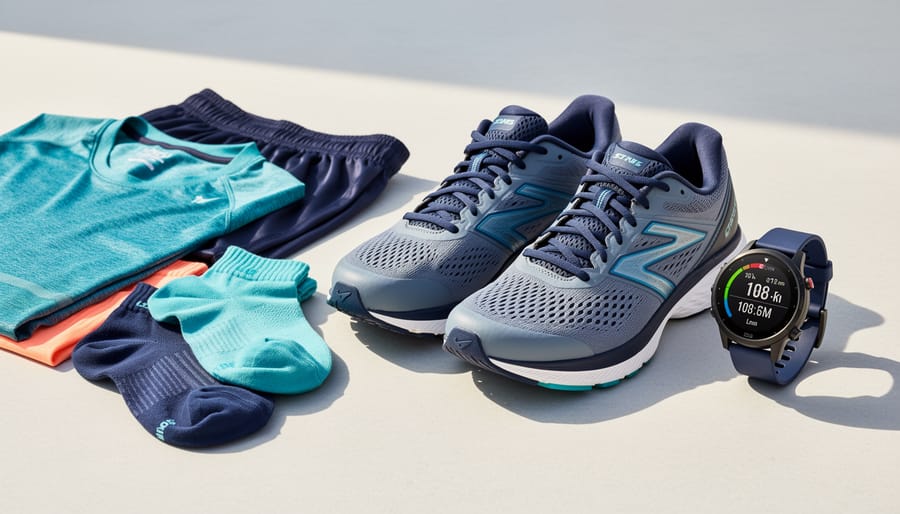
Start with the must-haves: moisture-wicking clothing. Cotton holds sweat against your skin, leaving you clammy in summer and dangerously cold during Canadian winters. Technical fabrics pull moisture away from your body, regulating temperature year-round. You don’t need expensive brands—many retailers offer affordable moisture-wicking basics that work perfectly well.
For safety, especially given our long winter darkness, reflective gear is essential if you run early morning or evening. A simple reflective vest costs under twenty dollars and dramatically increases your visibility. If you run on roads, consider adding a clip-on LED light for extra caution.
Weather-appropriate layers become crucial as seasons change. The general rule is to dress as if it’s five degrees warmer than the actual temperature, since you’ll heat up quickly. A lightweight, wind-resistant jacket handles spring and fall conditions beautifully, while winter runners benefit from thermal tights and a moisture-wicking base layer.
Tech tools fall firmly into the nice-to-have category for beginners. While GPS watches and training apps offer valuable data, your phone’s basic timer works fine initially. Many runners find free apps like Strava or Runkeeper motivating for tracking progress, but these aren’t prerequisites for getting started.
Focus your initial investment on proper shoes and basic moisture-wicking clothing. Everything else can wait until you’ve established your routine and identified what would genuinely enhance your experience.
Building Your Knowledge Base
Books, Podcasts, and Blogs Worth Your Time
Learning from experienced runners through books, podcasts, and blogs can transform your training journey from confusing to confident. Start with books like “Running Made Easy” by Kara Goucher, which breaks down training principles in everyday language, or “Born to Run” by Christopher McDougall for an inspiring narrative that celebrates the joy of running. For Canadian-specific insights, check out “Rebound: Train Your Mind to Bounce Back Stronger from Sports Injuries” by Olympic runner Hilary Stellingwerff, based in Victoria, BC.
On the podcast front, “The Running Room Radio” offers practical advice with a distinctly Canadian perspective, while “Ali on the Run Show” features relatable conversations with runners of all levels. For quick daily tips, “Ten Junk Miles” delivers humor alongside solid training advice.
Bloggers like “Canadian Running Magazine” provide accessible articles covering everything from winter running gear to nutrition basics, while “The Morning Shakeout” curates the best running news and stories. These resources respect your time by delivering valuable information without drowning you in scientific jargon, making them perfect companions whether you’re lacing up for your first 5K or training for your tenth.
When to Seek Professional Guidance
While self-guided training works well for many runners, there are times when professional support becomes invaluable. Consider consulting a certified running coach if you’re preparing for a specific race goal, struggling to break through a performance plateau, or simply want personalized guidance that matches your fitness level and lifestyle. Coaches can design tailored training plans that account for Canadian weather conditions and help you navigate the unique challenges of running through our diverse seasons.
If you experience persistent pain lasting more than a few days, recurring discomfort in the same area, or sharp pain during runs, seeking advice from a physiotherapist or sports medicine professional is essential. These experts can identify biomechanical issues, address muscle imbalances, and provide treatment before minor concerns develop into serious injuries. Many Canadian provinces offer publicly funded physiotherapy assessments, making professional guidance more accessible than you might think.
Technique improvement also benefits from professional eyes. A gait analysis from a qualified professional can reveal inefficiencies in your running form that lead to fatigue or injury risk. Remember, investing in professional guidance isn’t admitting defeat—it’s a proactive step that demonstrates commitment to your running journey and long-term health.
Connecting With the Running Community
Finding Your Local Running Group
Running doesn’t have to be a solo journey. Finding the right local running group can transform your experience from isolating to inspiring, providing motivation on tough mornings and celebrating your victories alongside people who truly understand the accomplishment.
Start your search with Running Room stores across Canada, which offer free weekly group runs led by experienced leaders. These sessions typically accommodate various paces, making them ideal for beginners who worry about holding others back. Staff can connect you with appropriate groups based on your current fitness level and goals.
Parkrun Canada has revolutionized accessible running with free, timed 5K events every Saturday morning in communities nationwide. These welcoming gatherings attract everyone from first-timers to seasoned athletes, and you’ll never finish last because volunteers wait to cheer in every participant. Simply register once online, print your barcode, and show up at any Canadian parkrun location.
Local running specialty stores often maintain bulletin boards or social media pages listing informal running groups. Many organize beginner-specific programs that gradually build distance over several weeks, removing the guesswork from training progression.
Facebook groups and Meetup.com host neighbourhood-specific running communities where you can find groups meeting near your home or workplace. Search terms like “your city + running group” or “beginner runners + your neighbourhood” yield surprisingly active communities.
Don’t overlook workplace wellness programs or community recreation centres, which frequently organize lunchtime or evening running groups at no cost. These convenient options eliminate travel barriers while connecting you with people who share similar schedules and local routes.

Online Communities and Virtual Support
Not every runner thrives in organized clubs or structured training groups, and that’s perfectly okay. Online communities offer incredible flexibility and support for those who prefer solo training or need encouragement that fits their schedule. Reddit’s running communities, particularly r/running and r/C25K, provide welcoming spaces where beginners can ask questions without judgment and experienced runners share hard-won wisdom. These forums buzz with race reports, training tips, and motivational success stories that remind you you’re not alone in your journey.
Facebook groups dedicated to Canadian runners connect you with people facing similar weather challenges and training conditions. Many cities have their own regional groups where members share favourite routes, safety tips, and local race information. Strava goes beyond simple tracking by creating virtual clubs where you can participate in monthly challenges, celebrate personal records, and give kudos to fellow runners worldwide.
Virtual race challenges have exploded in popularity, allowing you to complete distances on your own terms while still feeling part of something larger. These online spaces prove especially valuable during winter months or when life circumstances make in-person meetups difficult. The beauty of virtual support is its availability whenever you need it, whether that’s 5 a.m. before work or late evening after the kids are asleep.

Fueling Your Runs: Nutrition Resources for Beginners
Understanding Pre- and Post-Run Nutrition
Good news: nutrition for running doesn’t need to be complicated, especially when you’re starting out. The basics matter most, and your body will guide you as you develop your routine.
Before your run, aim to eat a light, easily digestible snack 30-60 minutes beforehand if you’re running longer than 30 minutes. A banana, toast with peanut butter, or a small bowl of oatmeal works perfectly. For shorter runs, many beginners run comfortably on an empty stomach, particularly in the morning.
Post-run nutrition helps your body recover. Within 30-90 minutes after finishing, enjoy a balanced meal or snack containing both protein and carbohydrates. Think chocolate milk, yogurt with fruit, or a turkey sandwich. This combination supports muscle repair and replenishes energy stores.
Hydration deserves equal attention. Drink water throughout the day, not just around your runs. For runs under an hour, water is sufficient. Sports drinks become helpful for longer efforts exceeding 60-90 minutes when you’re losing electrolytes through sweat.
Most beginners don’t need specialized sports nutrition products like gels or electrolyte supplements initially. Focus on whole foods and proper hydration first. As your mileage increases and you tackle longer distances, you can gradually explore these options based on your body’s specific needs and responses during training.
Trusted Sources for Runner Nutrition Advice
Fueling your runs properly makes a significant difference in performance and recovery, but nutrition advice online can feel overwhelming. Start with registered dietitians who specialize in sports nutrition and understand runners’ unique needs. Organizations like Dietitians of Canada (available in English and French) offer a searchable directory to connect you with local professionals who can provide personalized guidance.
For evidence-based online resources, look to reputable sources like Running Magazine Canada, which regularly features nutrition articles tailored to Canadian runners and our climate considerations. The Canadian Society for Exercise Physiology also provides reliable information on fueling for endurance activities.
Many provincial running associations maintain resource libraries with nutrition guides specific to regional considerations, from hydrating in prairie heat to fueling winter training. Remember that what works for one runner may not suit another, so be patient as you discover your optimal nutrition strategy through trusted guidance and personal experimentation.
Tracking Progress Without Obsessing Over Data
As a new runner, you might feel tempted to track everything—pace, heart rate, cadence, sleep quality, nutrition, and more. While data can be motivating, it’s important to find a balance that supports your progress without turning running into a spreadsheet exercise.
Start simple. For beginners, three metrics matter most: distance covered, how you felt during the run, and whether you completed your planned workout. A basic running watch or smartphone app that tracks time and distance provides all the information you need initially. Apps like Strava or Garmin Connect offer free versions that log your runs without overwhelming you with analytics.
Consider keeping a simple training journal—digital or paper—where you note not just numbers, but qualitative observations. Did your legs feel heavy? Was your breathing comfortable? These subjective markers often reveal more about your readiness and recovery than any single data point.
As you gain experience, you might explore additional metrics like heart rate zones or weekly mileage totals, but avoid the trap of letting data dictate your enjoyment. If checking your watch every thirty seconds diminishes your pleasure in running, scale back. The best indicator of progress is often the simplest: running feels easier than it used to, you’re covering familiar routes faster, or you’re simply looking forward to your next outing.
Remember, elite athletes have coaches to interpret their data. For recreational runners, intuition and consistency matter more than perfect metrics. Trust your body’s feedback alongside your chosen tracking method, and adjust your approach if monitoring becomes stressful rather than helpful.
The abundance of quality running resources available to Canadian runners is truly exciting, but remember that you don’t need to use them all at once. Start with one or two foundational tools that resonate with your goals and learning style, whether that’s a beginner-friendly training plan, a supportive local running group, or a trusted podcast for motivation during your runs. As you build consistency and confidence, you can gradually explore additional resources that complement your journey.
Ultimately, the most valuable resource isn’t found in any app, book, or website. It’s simply getting out the door consistently, putting one foot in front of the other, and showing up for yourself. The running community across Canada, from coast to coast, is remarkably welcoming and supportive, ready to celebrate your progress whether you’re tackling your first 5K or training for a marathon. You belong here, and every run you complete is a step forward. Lace up those shoes and embrace the journey ahead.